






In the annals of African football, few decisions have shaken the very foundation of sporting integrity like the Confederation of African Football’s (CAF) stunning reversal of the 2025 Africa Cup of Nations (AFCON) final.
What began as a chaotic, emotionally charged finale in Rabat has now spiraled into a landmark ruling, one that critics argue undermines the very essence of fair play.
CAF’s Appeal Board, invoking Articles 82 and 84 of its regulations, stripped Senegal of a hard-fought 1–0 victory and handed Morocco a 3–0 administrative win, effectively crowning the hosts champions months after the final whistle.
The AFCON 2025 final between Senegal and Morocco was already destined for controversy long before CAF’s ruling.
With the match locked at 0–0 deep into stoppage time, the referee awarded Morocco a highly contentious penalty, a decision that ignited outrage among Senegalese players and officials. In an unprecedented protest, Senegal’s team walked off the pitch, halting the game for over 14 minutes.
It took the intervention of Captain Sadio Mané and match officials to restore order. Senegal returned, Morocco missed the penalty, and in a dramatic twist, Pape Gueye scored in extra time to seal what appeared to be a historic victory.
On the pitch, Senegal had triumphed. In spirit, they had endured adversity. In football logic, they were champions. But in regulatory interpretation, the story had only begun.
Almost immediately after the final, Morocco lodged a formal protest, citing a breach of Article 82, arguing that Senegal’s temporary walk-off compromised the integrity of the match.
CAF’s initial disciplinary ruling seemed measured: heavy fines, suspensions for players and officials, and condemnation of the conduct, yet crucially, the result stood.
That decision reflected a traditional football principle: punish misconduct, but preserve the result earned on the field.
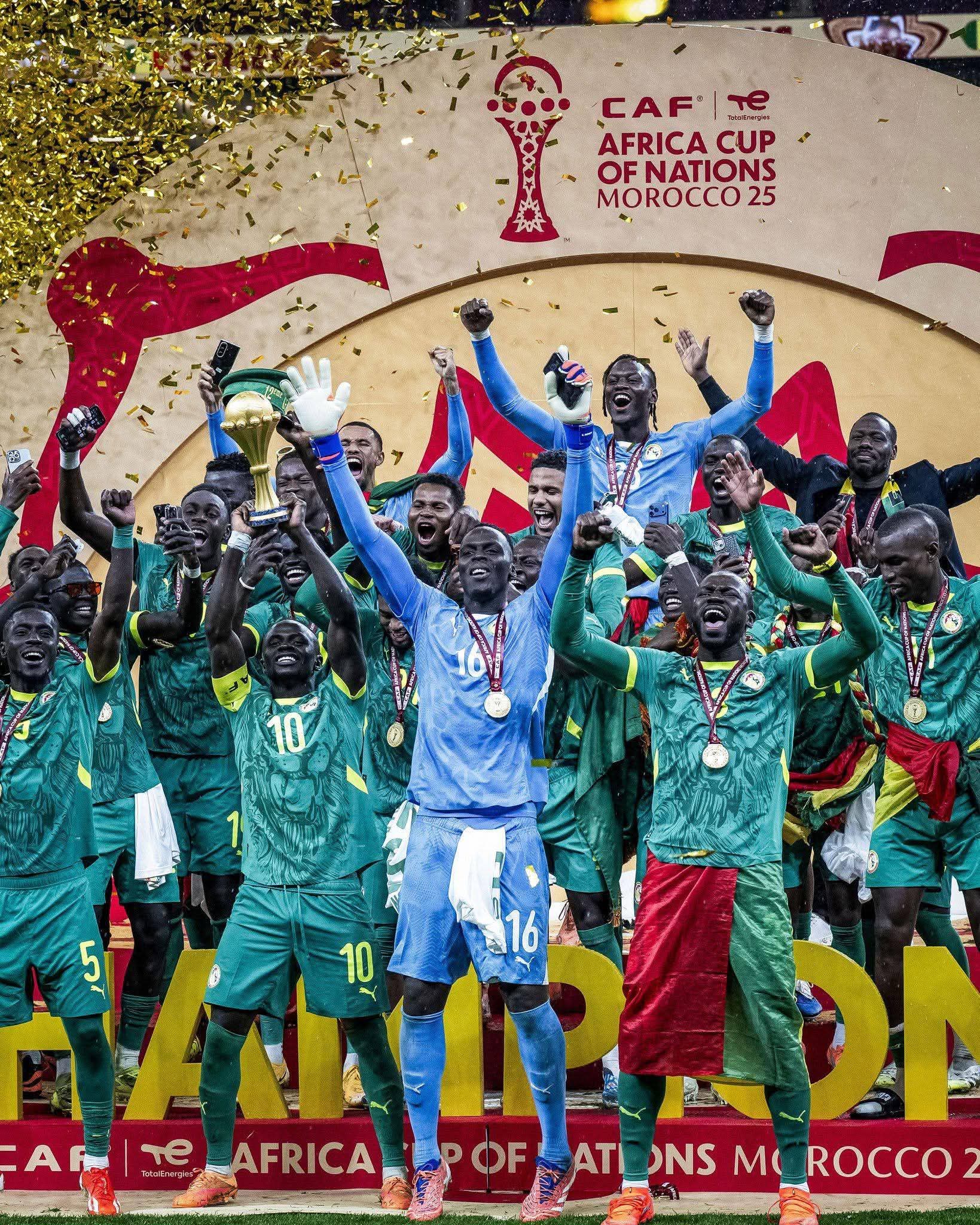
However, the Appeal Board’s intervention months later flipped that logic entirely. It’s a ruling that seems to have redefined not only the result, but the future destiny of the game in the continent.
CAF’s final decision was blunt and unforgiving. Senegal was deemed to have forfeited the match. The result was officially recorded as 3–0 in favour of Morocco, and the earlier disciplinary ruling was set aside entirely.
The justification? Senegal’s walk-off, even if temporary and later resolved, constituted a violation severe enough to nullify the match outcome. This interpretation has sparked a fundamental question: Can a team win a match on the pitch, and still lose it in the boardroom?
Football has always balanced two pillars: the laws of the game and the spirit of the game. CAF’s ruling leans heavily toward the former, perhaps excessively so.
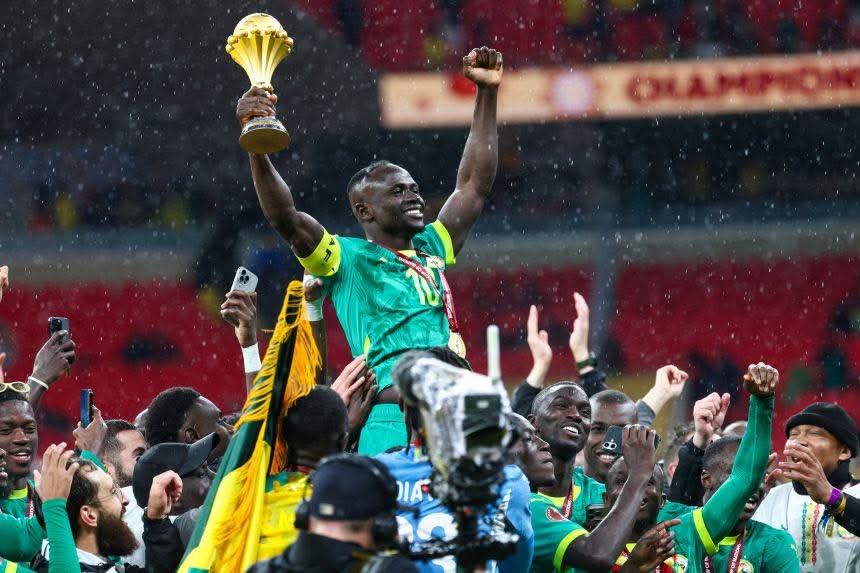
Critics argue that Senegal returned to complete the match, fulfilling the contest. The referee allowed play to resume, validating continuation. Morocco missed the penalty, and the game proceeded fairly afterward, yet, none of these factors ultimately mattered. Instead, a technical infringement, however momentary, was elevated above 120 minutes of football.
This creates a troubling precedent.
Future matches could be decided by procedural breaches, not performance. Teams may weaponize legal protests over on-field competition. The sanctity of results may become subject to retrospective reinterpretation
Beyond the legal arguments lies a deeper damage, one to the credibility of African football itself. The AFCON 2025 final had everything. Tactical discipline, emotional intensity and narrative drama.
But it will now be remembered not for Gueye’s goal or Mané’s leadership, but for a ruling delivered months later in a courtroom setting.
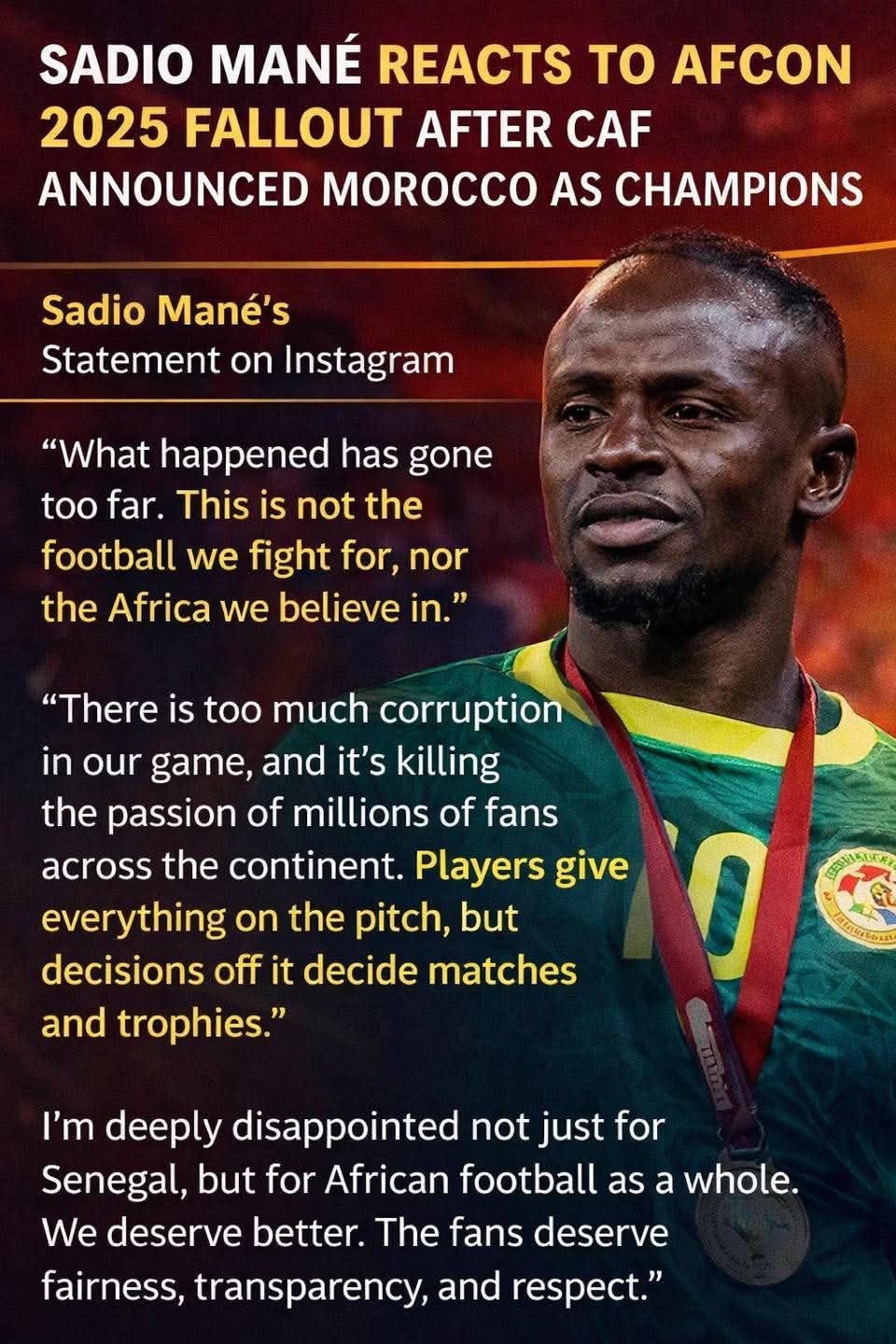
Even within Senegal, the decision has been described as a “shame for Africa,” with plans already underway to challenge it at the Court of Arbitration for Sport (CAS).
CAF’s unprecedented decision may be legally defensible within its statutes, but football is not played in statutes. It is played on grass, decided by goals, and sustained by belief in fairness.
By stripping Senegal of a title they won on the field, CAF risks sending a dangerous message, that results are provisional, victories negotiable, and fair play, ironically, optional.
For a continent striving to elevate its football to global standards, this ruling may prove to be not just controversial, but deeply consequential.
The fallout has spiraled into a full-blown global controversy, drawing sharp reactions from football icons, governing figures, and stakeholders across continents.
At the centre of the storm stands former England defender and pundit Jamie Carragher, whose blunt assessment has echoed far beyond the studios of European television.
According to Carragher, “This damages football’s credibility”
Carragher’s reaction captured the disbelief of the global audience. Speaking in his role as a broadcaster, he questioned not just the ruling, but the thinking behind it.
He argued that overturning a result already decided on the pitch sends a dangerous message that football matches can be settled in boardrooms long after the final whistle. For Carragher, the issue is not whether rules exist, but how they are applied.
His criticism cuts deeper into governance. If a team returns, completes a match, and wins, can a technical breach erase sporting reality? That question now defines the debate.
If Carragher gave the controversy global voice, Sadio Mané gave it emotional weight. The Senegal Captain’s response was brief but powerful: “The world knows the true champions.”
Behind those words lies a federation in open resistance. Senegal FA has formally rejected CAF’s verdict. Officials describe the ruling as “unprecedented and unjust”
A legal battle at the Court of Arbitration for Sport (CAS) is already underway. For Senegal, this is no longer football, it is a fight for historical truth.
While outrage dominates one side, Morocco’s camp has taken a firm, legalistic position. Their argument aligns strictly with CAF statutes. A walk-off, even temporary, is a violation that triggers forfeiture provisions.
To them, the decision is not political but procedural. It reinforces discipline and underscores that no team is bigger than the rules.
Yet, even among neutral observers, this rigid interpretation has raised eyebrows, particularly because the match resumed and reached its natural conclusion.
FIFA President, Gianni Infantino had earlier condemned the chaotic scenes that led to Senegal’s walk-off, emphasizing respect for referees and order in the game. However, FIFA’s relative silence on the final CAF ruling has become a talking point in itself.
FIFA has not endorsed the stripping of the title. Nor has it openly challenged CAF’s authority. This diplomatic neutrality has left a vacuum, one filled by speculation, criticism, and growing distrust.
Across football circles, the reaction has been swift and largely critical. Veteran tactician, Claude Le Roy questioned the consistency of disciplinary enforcement, warning that such decisions risk eroding trust in African football structures.
Pundits in Europe and Africa have gone further, describing the ruling as a “dangerous precedent”. A “legal overreach into sporting territory”, and, most damningly, “a rewriting of history”
From across the world, CAF is accused of undermining fair play principles. Debates rage over whether laws should override the spirit of competition. This controversy has exposed a deep philosophical divide.
CAF’s position is, rules must be enforced strictly, regardless of circumstances. And for critics, football is decided on the pitch; sanctions should not erase results already earned.
All eyes now turn to CAS. If the ruling is overturned, CAF’s authority will suffer a major blow. If it stands, a new precedent will be set, one where disciplinary law can override match reality. It will become a defining moment for African football. Because in the end, this is not just about Senegal or Morocco, it is about the soul of the game itself.