





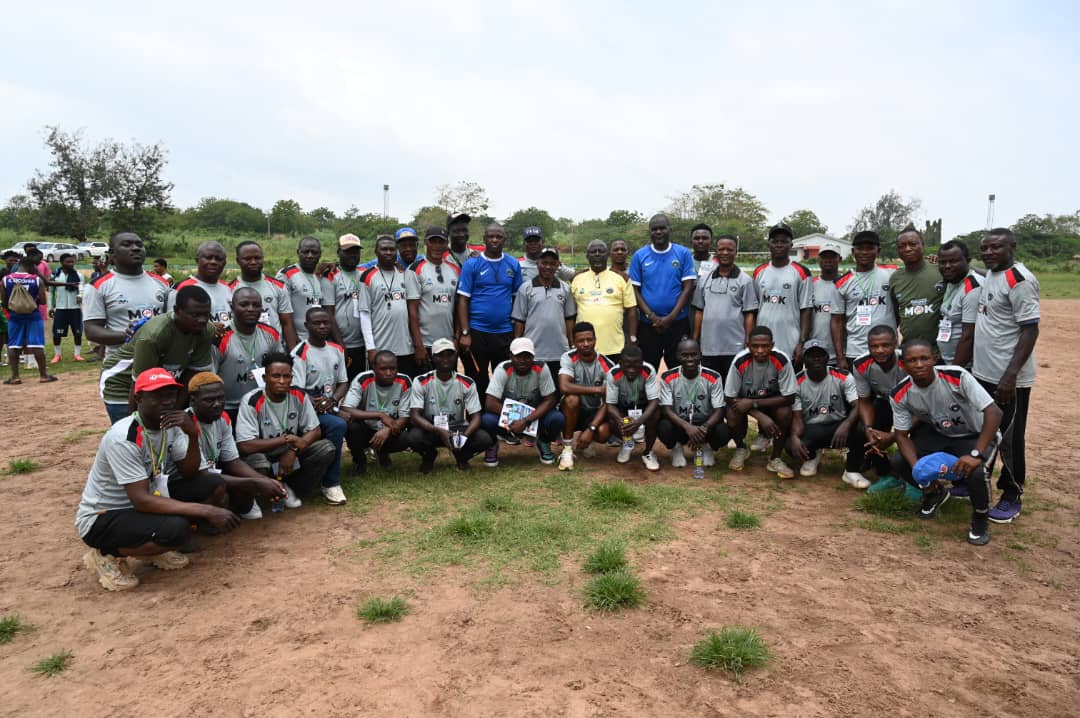
By investing in coaches today, Offa Football Council, being led by Alhaji Azeez Omoluabi is laying the foundation for a stronger football culture in Kwara State tomorrow.
The future of football is not built on the pitch alone. It begins in the minds of coaches, in the quality of training young players receive, in the discipline instilled in them and in the technical knowledge that transforms raw talent into football excellence.
It is against this background that the Offa Football Council, under the leadership of Alhaji Azeez Omoluabi, has opened a new vista in grassroots football development in Kwara State with the successful organisation of a two-day football coaching seminar designed to equip coaches with modern techniques and a better understanding of the game.
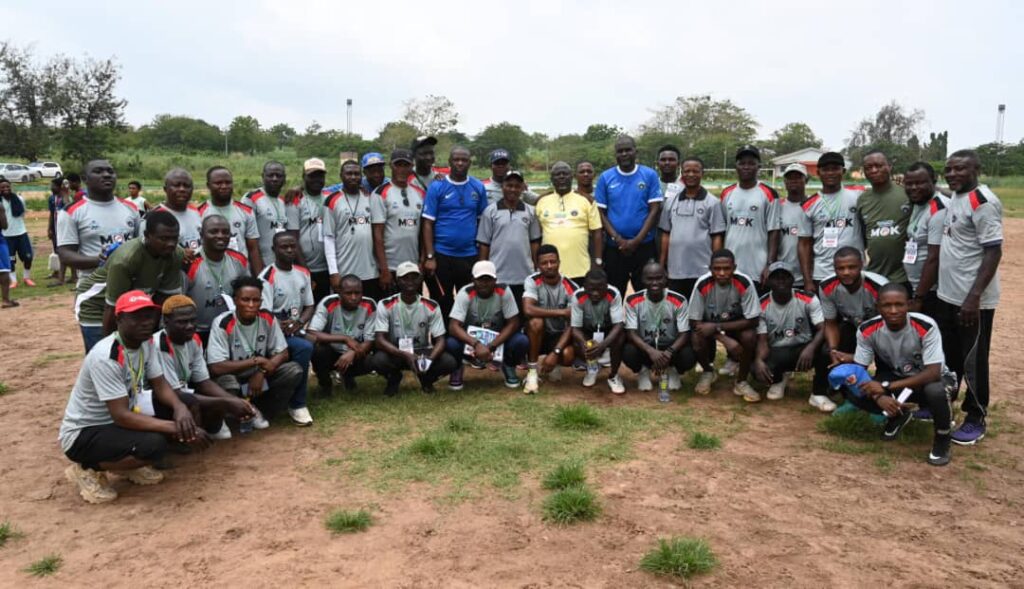
Held on Friday, October 9, and Saturday, October 10, 2026, the Kwara Football Coaching Seminar brought together more than 40 grassroots coaches from Offa and other parts of the state for an intensive programme of theoretical instruction, practical demonstrations and professional interaction.
With the theme, “Coaching Methodology and the Importance of Passing Drills,” the seminar represented more than another gathering of football stakeholders. It was a deliberate investment in the human resources upon which the future of football in Kwara State depends.
At a time when football is becoming increasingly sophisticated, with tactical innovation, sports science, individual player development and data-informed decision-making influencing the modern game, the need to equip grassroots coaches with contemporary knowledge has never been greater.

For Offa Football Council, the message was clear: the journey towards producing better footballers must begin with better-informed coaches.
The initiative reflects the vision and commitment of Omoluabi, who recognised that meaningful football development requires more than organising competitions and discovering talented youngsters. It also requires systematic investment in the people responsible for identifying, nurturing and preparing those talents for higher levels of the game.
By bringing experienced instructors to Offa and creating an opportunity for grassroots coaches to learn without paying participation fees, the Council Chairman demonstrated a practical understanding of one of the major challenges facing community football, which is the gap between the enthusiasm of local coaches and their access to structured technical education.
Many grassroots coaches work under difficult conditions, often with limited resources, inadequate training equipment and few opportunities to attend formal coaching courses. Yet they are frequently the first people to introduce children to organised football, teach them the fundamentals and influence their attitudes towards discipline, teamwork and competition.
The quality of their work can determine whether promising young players develop properly or fail to fulfil their potential.
Omoluabi’s intervention therefore, addresses a critical part of the football development chain. Rather than concentrating exclusively on players and competitions, he has chosen to strengthen the technical foundation upon which both depend.

The initiative deserves recognition because it places knowledge at the centre of development and provides a model that other local Football Councils can study and adapt.
The seminar was also designed to be accessible. More than 40 participating coaches benefited from the programme free of charge, with feeding provided throughout the exercise. This arrangement helped remove some of the financial and logistical barriers that might otherwise have prevented coaches from participating.
Such practical support strengthened the programme’s developmental value, ensuring that the opportunity was not limited to those who could afford to attend.
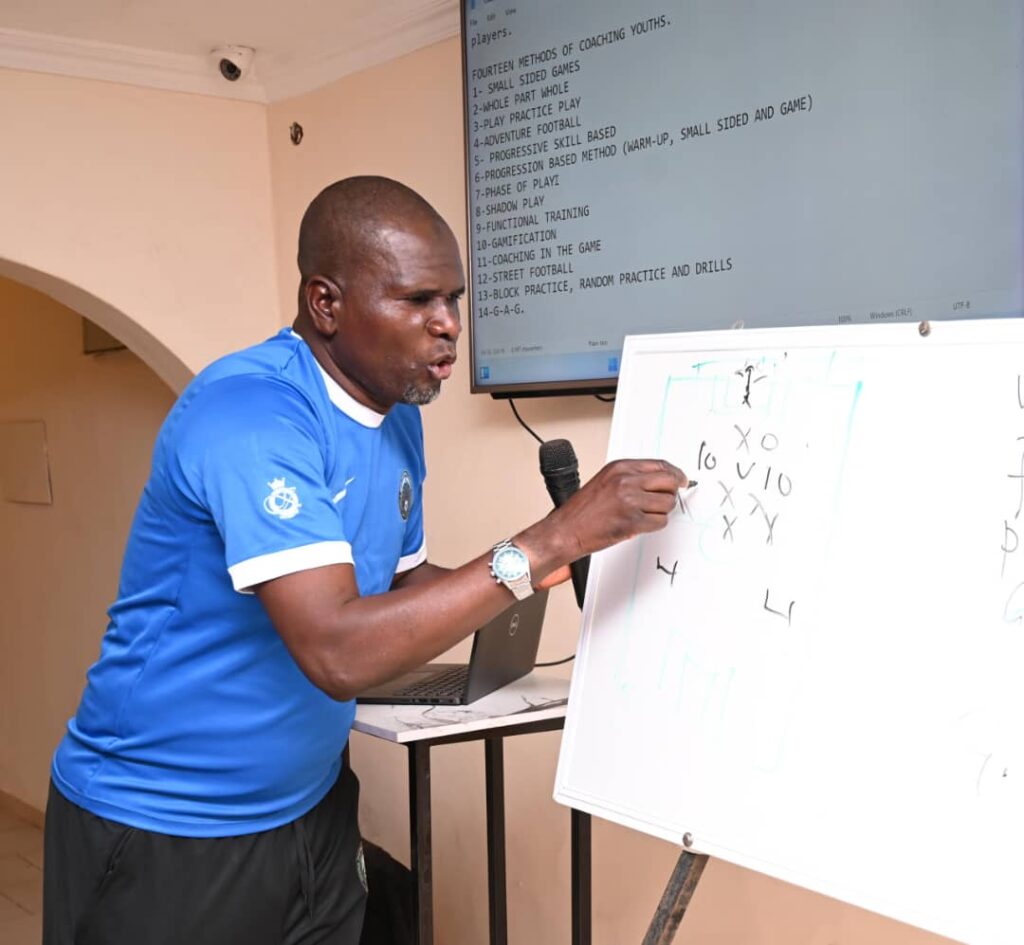
One of the seminar’s most significant features was the involvement of Coach Aliyu Zubair, the former Nigeria U-20 national team, the Flying Eagles, coach, who currently manages Sudanese Premier League side Al-Ahli Wad Madani.
Zubair, who served as the lead instructor, was assisted by Coach Lookman Ijaiya. Together, they delivered theoretical and practical sessions intended to bridge the gap between coaching principles and their application on the football field.
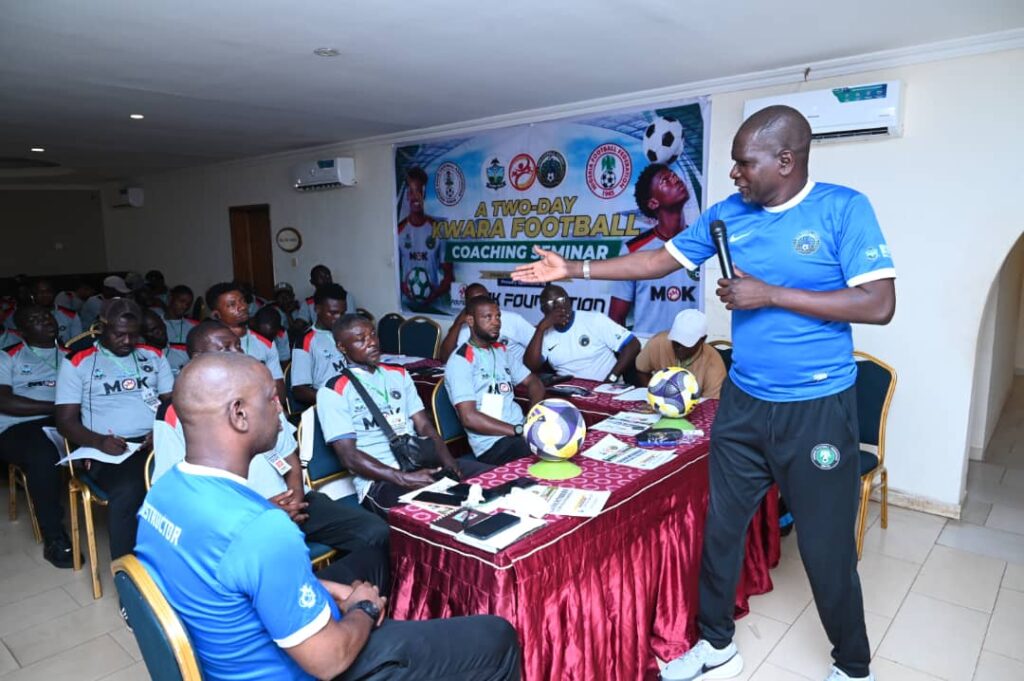
The presence of a coach with national-team and professional-club experience gave participants an opportunity to engage with knowledge drawn from higher levels of the game and consider how relevant aspects could be adapted to grassroots football.
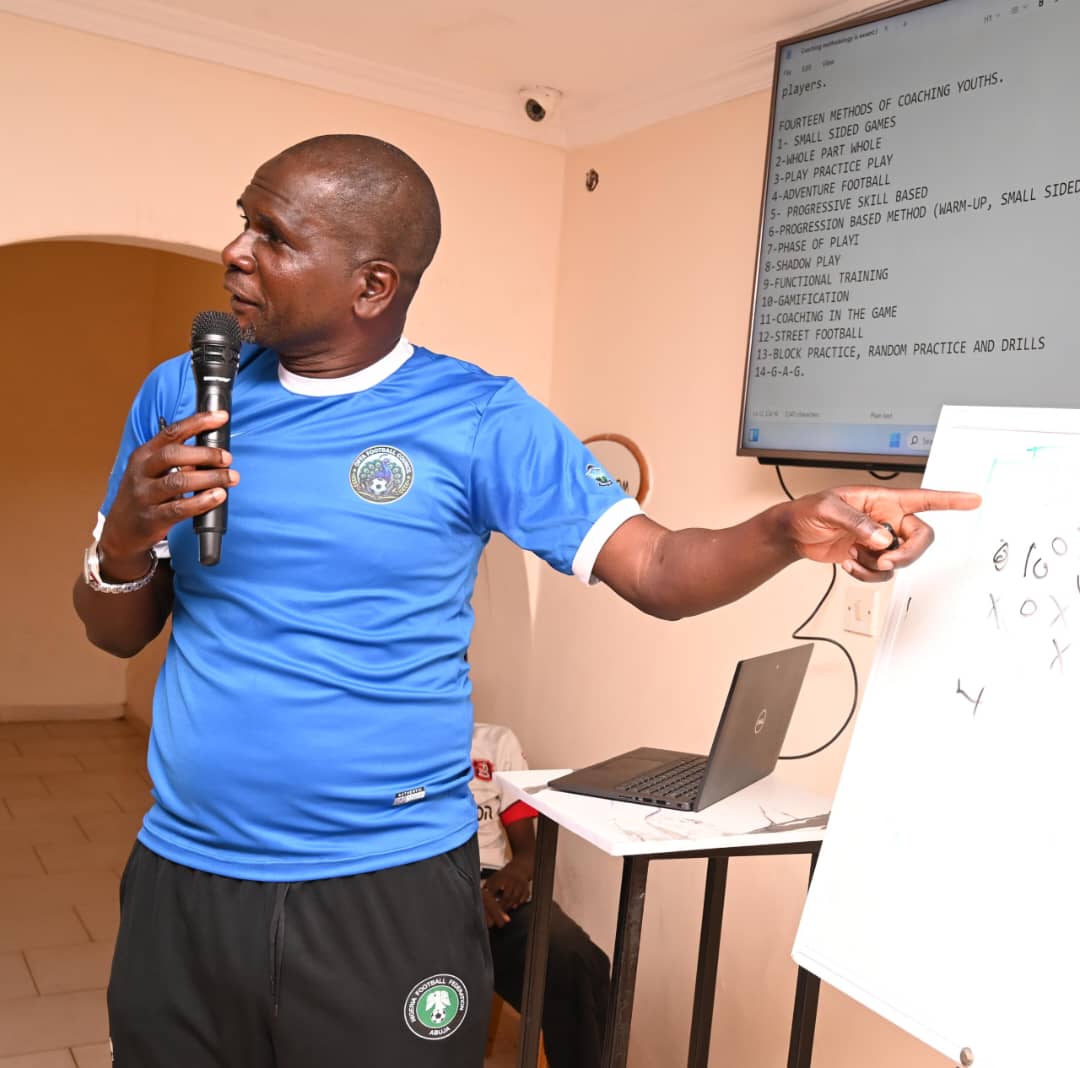
Delivering his lecture on coaching methodology and the importance of passing drills, Zubair emphasised the need for coaches to approach their responsibilities with a clear philosophy, purposeful training sessions and a commitment to continuous learning.
He also urged grassroots coaches to incorporate Personal Development Plans (PDPs) into their coaching programmes.
According to him, structured individual development plans can help coaches identify the strengths and weaknesses of players, establish achievable improvement targets and monitor progress over time.
The importance of this approach cannot be overstated. A young footballer may possess natural ability, but talent alone does not guarantee progress. Players need carefully designed exercises, consistent assessment, constructive feedback and opportunities to apply what they learn in competitive situations.
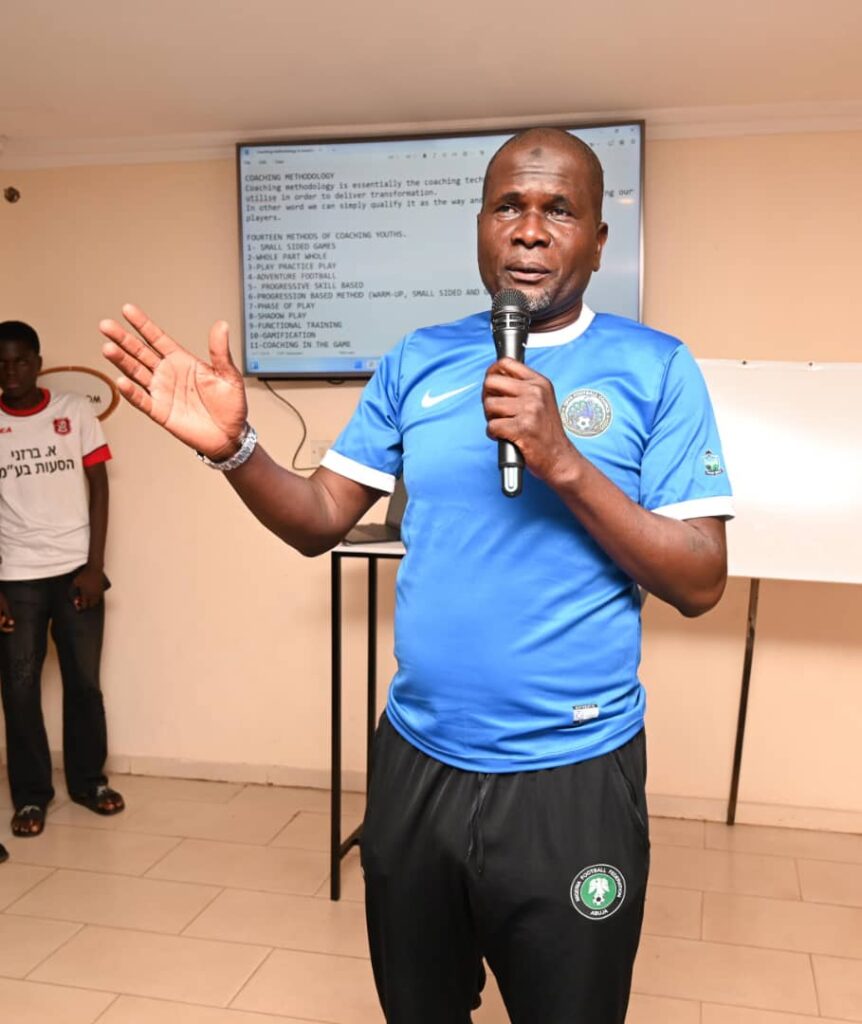
A Personal Development Plan provides a framework for that process. It helps coaches move beyond treating every player in the same way and encourages them to identify individual needs while building a collective team philosophy.
Zubair further stressed that purposeful passing drills remain fundamental to improving technical ability, ball circulation, movement, decision-making and a team’s capacity to retain possession.
For young players, repeated practice under appropriate coaching conditions can improve their first touch, passing accuracy, awareness and ability to respond quickly under pressure. These skills provide a foundation for understanding more advanced tactical concepts as players progress.
His message to the participants was that coaching education must not end with the seminar. They were encouraged to build on the knowledge acquired, remain open to new ideas and apply the lessons to their daily work with players.
At the conclusion of the programme, Zubair commended Omoluabi and his associates for creating the opportunity for young coaches to improve their knowledge. In recognition of his contribution, the Offa Football Council Chairman announced Zubair’s appointment as Patron of the Council.
The appointment acknowledged the instructor’s contribution to the programme and provided a basis for continued engagement with the Council’s football development initiatives.
Another defining feature of the seminar was its combination of classroom learning and practical instruction.

The theoretical sessions were held at Avalon Hotel, Offa, while the practical exercises took place at the mini-stadium pitch of the Federal Polytechnic, Offa.
This combination was particularly important because football coaching is both an intellectual and a practical discipline. Understanding a tactical principle in a classroom is one thing; knowing how to demonstrate it, correct mistakes and help players apply it during training is another.
Through the practical component, participants had the opportunity to see coaching principles translated into exercises and training situations. This allowed them to appreciate the relationship between planning, demonstration, repetition, correction and performance.
The focus on passing drills also highlighted the importance of purposeful training. Effective coaching is not simply about keeping players occupied with the ball. Each exercise should have a clear objective, appropriate progression and a connection to the demands of actual matches.
For grassroots coaches, learning to design such sessions can improve the quality of training even where facilities and equipment are limited.
The practical emphasis therefore, made the seminar relevant to the everyday realities of community football, where coaches must often work with modest resources while seeking to achieve meaningful results.
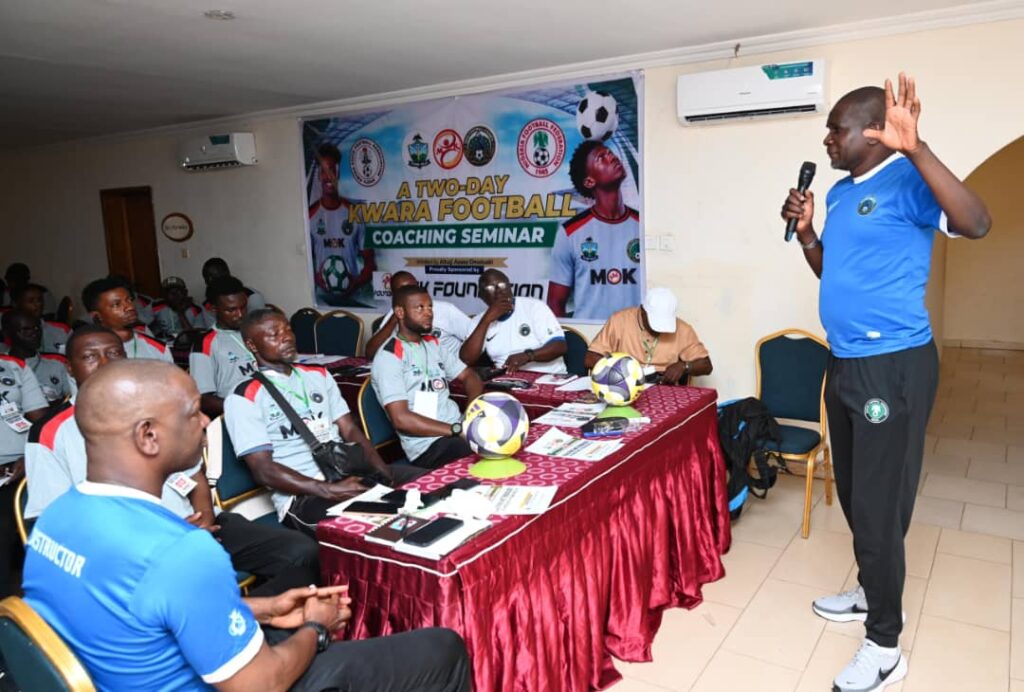
The programme also provided a platform for interaction among coaches from different areas of Kwara State. Such exchanges can encourage collaboration, the sharing of experiences and the development of a stronger professional network among those working at the grassroots.
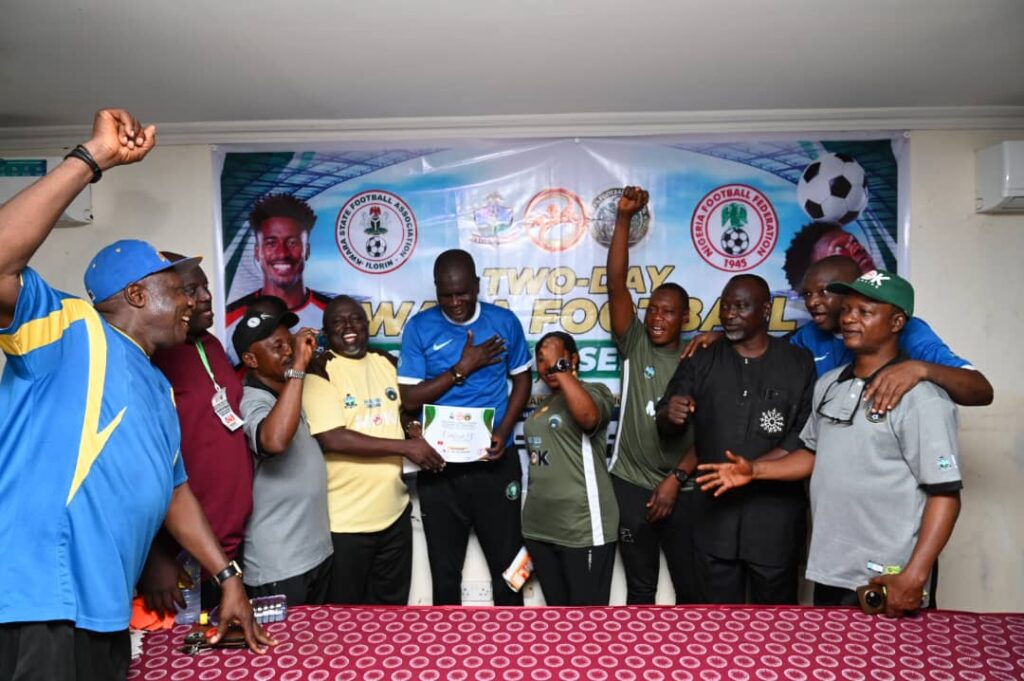
By the time the seminar ended, participating coaches had received certificates, marking their participation in a programme intended to strengthen their technical knowledge and professional outlook.
A major pillar of the seminar’s success was the sponsorship provided by the MOK Foundation, founded by Alhaji Muyideen Okunola.
Omoluabi openly acknowledged Okunola’s support, describing him as a dependable partner whose willingness to respond to calls for assistance had contributed to the advancement of grassroots football programmes.
His appreciation reflected a broader truth about sports development, that government and football authorities cannot be expected to carry the entire responsibility alone. Individuals, foundations, businesses, former players and community organisations all have roles to play in creating opportunities for young people.
The MOK Foundation’s intervention demonstrated how private support can be channelled towards capacity building rather than being restricted to the immediate needs of competitions or individual teams.
Sponsoring coaching education has a potentially wider reach because the benefits can extend beyond the duration of the event. A coach who acquires new knowledge and applies it consistently may improve the development of many players over several seasons.
This makes coaching education a valuable area for sustained investment.
Omoluabi consequently called on other individuals, organisations and football stakeholders to emulate MOK Foundation by supporting initiatives that improve coaching standards and strengthen grassroots football.
His appeal is timely. If more sponsors commit resources to technical education, equipment, grassroots competitions and structured player development, Kwara State can create a more coordinated environment for nurturing young footballers.
Beyond the immediate classroom and practical sessions, the seminar also opened a pathway towards further professional development.
Three participating coaches are to benefit from sponsorship for training at the National Institute for Sports (NIS), with the initiative supported by the Peoples Democratic Party governorship candidate in Kwara State, Engr. Sulaiman Bolakale Kawu Agaka.
The sponsorship offers a potentially important next step for the selected coaches, giving them an opportunity to pursue further technical education and strengthen their qualifications.
For grassroots football, such opportunities can help create a multiplier effect. Coaches who receive more advanced training can return to their communities with improved knowledge, which they can pass on to fellow coaches and the players under their supervision.
The initiative also illustrates the importance of linking introductory seminars to further education. A two-day programme can stimulate interest, introduce new methods and challenge existing assumptions, but sustained professional development requires continued learning and practical application.
The NIS sponsorship therefore, adds another dimension to the Offa initiative by providing a bridge between a community-level seminar and further formal coaching education.
Omoluabi also acknowledged the support of Hon. Saheed Popoola, the PDP senatorial candidate for Kwara South, alongside the contributions of other stakeholders who supported the programme. Hon. Popoola paid for the registration of all the participants for the seminar.
The involvement of different supporters underlines the need for a collaborative approach to football development, in which resources and expertise are directed towards programmes with clear developmental objectives.
The success of the Offa seminar should be assessed not only by the number of coaches who attended but also by what happens after they return to their respective teams and communities.
In the short term, the programme has provided participants with fresh technical knowledge, exposure to contemporary coaching principles and an opportunity to review their methods.
Another immediate benefit is the increased awareness of individual player development, purposeful passing drills and the need for coaches to plan their sessions around specific learning objectives.
However, the longer-term benefits could prove even more significant if the lessons are consistently applied.
First, better coaching can improve the technical development of young players. Regular, well-designed sessions can help them become more confident on the ball, improve their passing and movement, and make better decisions during matches.
Secondly, a stronger coaching culture can improve the quality of grassroots competitions. When coaches understand how to organise teams, manage training loads appropriately, teach tactical principles and develop players progressively, the standard of football can improve over time. Also, the programme could strengthen talent identification.
Improved coaching education can support youth discipline, teamwork and personal growth. Grassroots football is not only a pathway to professional careers; it is also an environment in which young people can learn responsibility, respect, resilience and cooperation.
A sustained programme of coaching development can create a stronger talent pipeline for local clubs, Kwara United, age-grade teams and, eventually, national youth teams.
Equally, the initiative can encourage a culture of continuing professional development across the state’s football community. If other Local Councils replicate the model, coaching education could become a regular feature of football administration in Kwara rather than an occasional event.
The seminar is best understood as the beginning of a process rather than a complete solution to the challenges confronting grassroots football.
The Offa initiative offers a practical reference point for other Local Football Councils and the Kwara State Football Association.
It demonstrates that meaningful development programmes do not always require elaborate infrastructure or massive expenditure. With clear objectives, capable instructors, committed leadership and appropriate sponsorship, a local football council can create an opportunity with benefits extending beyond its immediate geographical boundaries.
The next step is to make such interventions sustainable. Regular refresher courses, periodic assessments, mentorship arrangements and opportunities for coaches to observe training sessions at higher levels could help preserve the momentum created by the seminar.
The Kwara State Football Association, under the leadership of Malam Idris Musa Thuraya, can also draw lessons from the initiative by encouraging other Local Football Councils to organise similar programmes according to their resources and needs.
There is room for a broader state-wide framework that links local coaching seminars to recognised qualifications, talent identification programmes, youth competitions and the development pathways of clubs.
The importance of refereeing education, which Omoluabi has also identified as part of the Council’s future plans, should not be overlooked. Improving the knowledge of coaches and match officials can contribute to a more informed, orderly and technically progressive football environment.
At the heart of the seminar is a simple but powerful principle: football development must begin at the foundation.
When that foundation is neglected, talent can be wasted. When it is strengthened through education, mentorship and proper planning, the prospects for sustainable progress improve.
By initiating the two-day coaching seminar, Omoluabi has drawn attention to an area of football development that deserves greater recognition and investment.
The real test will be what happens next.
For now, Offa has sent a message that deserves to resonate across Kwara State and beyond. The road to football excellence begins with investing in the people who teach the game.
And in that respect, the initiative spearheaded by Alhaji Azeez Omoluabi represents a promising new vista for grassroots football in the state.