


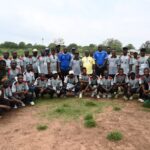
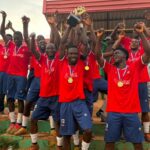
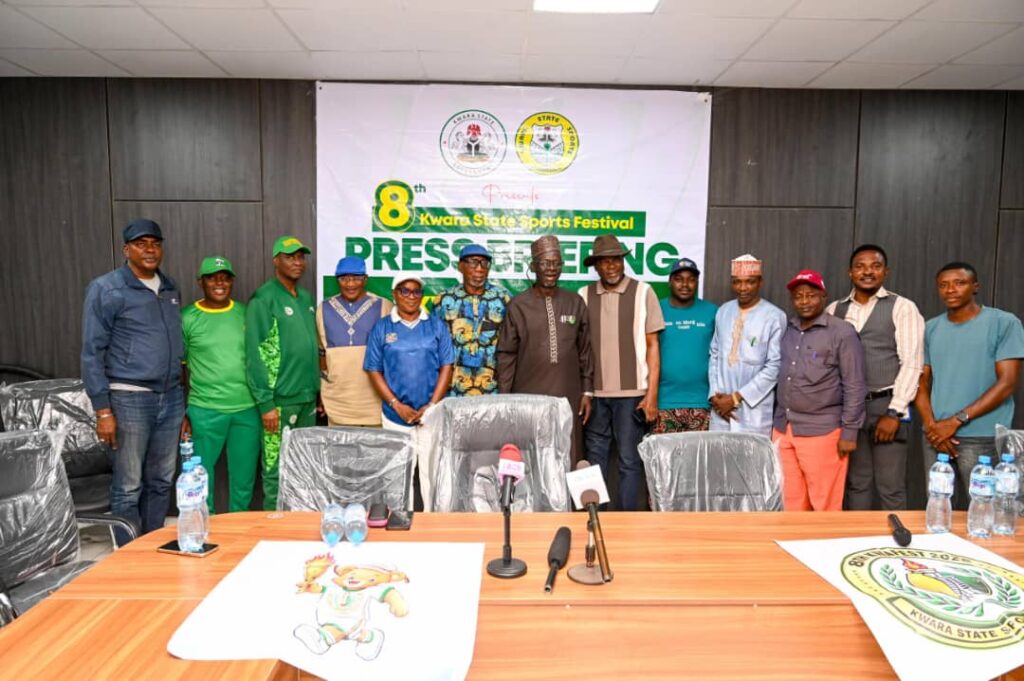
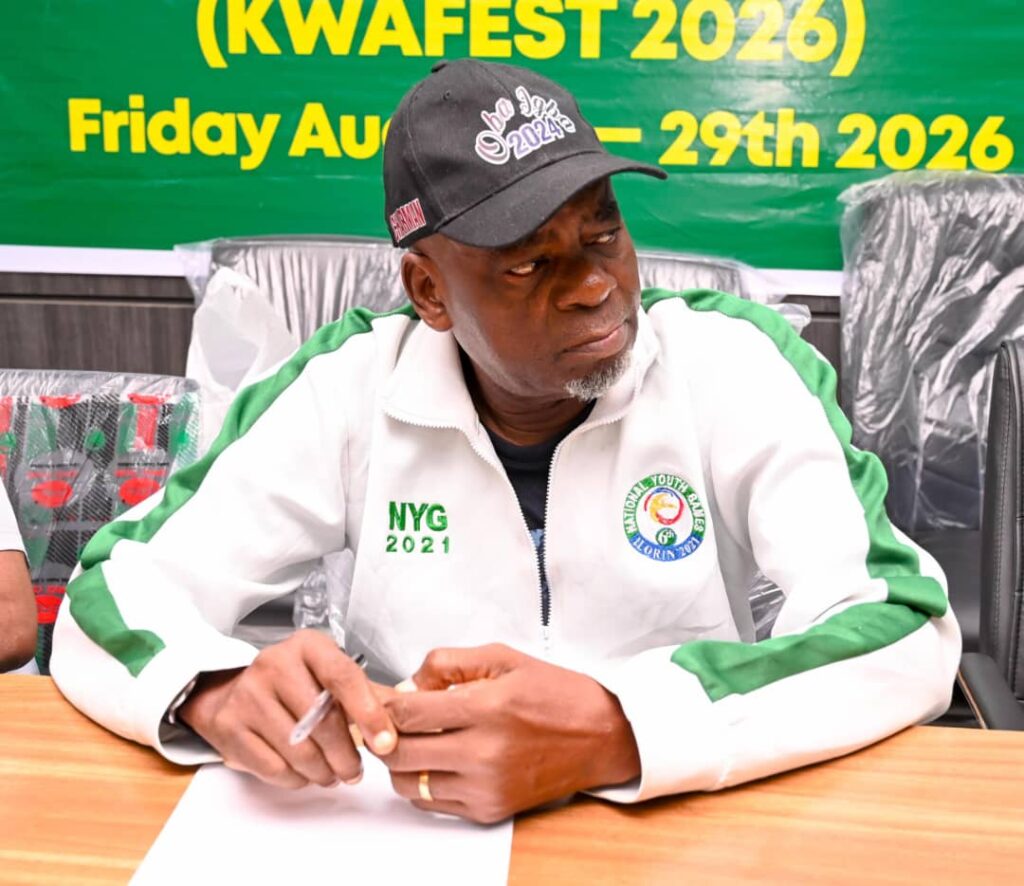
As the 8th Kwara State Sports Festival begins tomorrow, Saturday August 22, 2026, the celebration will obviously be more than the performance of athletes from the 16 Local Government Areas of the state. The multi-sports competition is more than a tournament. It is a renewed investment in the state’s sporting future
There are moments in the history of sports when a competition becomes bigger than the medals, trophies and individual performances that define it. For Kwara State, the State Sports Festival has increasingly become one of such moments.
When athletes from the 16 Local Government Areas converge for the 8th Kwara State Sports Festival beginning from tomorrow, they will not merely be competing for honours. They will be participating in a sporting tradition that has survived years of interruption, a tradition that has now been deliberately revived and repositioned as an important vehicle for talent discovery, youth development, social integration and the rebuilding of Kwara’s sporting culture.
The significance of the 8th edition therefore, cannot be fully appreciated without looking backwards, to the origins of the festival, the years when it disappeared from the sporting calendar, its dramatic return in 2020 and the renewed investment in sports infrastructure under Governor AbdulRahman AbdulRazaq.
Kwara has historically enjoyed a strong sporting culture. From athletics to football, boxing, table tennis, basketball, volleyball, handball, cricket, squash and other sports, the state has produced athletes who have represented the state and Nigeria at major national and international competitions.
The State Sports Festival was conceived within this broader philosophy, which was to provide a structured platform through which athletes at the grassroots could compete, be identified and developed.
The festival brought together athletes from across the state’s Local Government Areas and provided a pathway between community sports and higher-level competition. For young athletes, particularly those outside the major sporting centres, the festival offered something invaluable, which is the opportunity to be seen.
A talented athlete from Baruten, Edu, Patigi, Kaiama, Offa, Oyun, Ifelodun or any other part of the state will compete against the best young athletes from Ilorin and other urban centres. That was the real power of the festival. It democratized sporting opportunity.
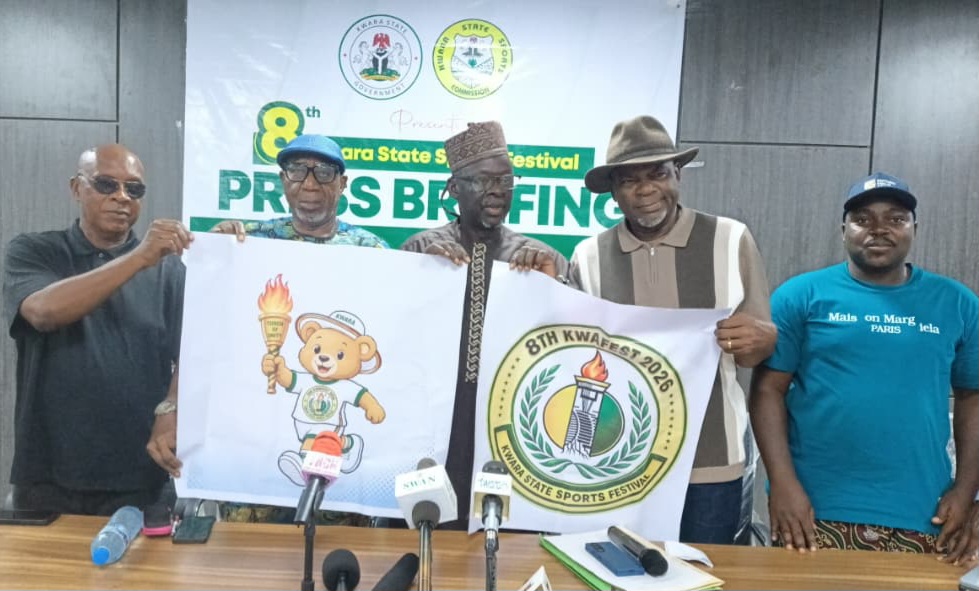
But, like many sporting programmes across Nigeria, the Kwara State Sports Festival suffered from discontinuity. For years, the competition disappeared from the state’s sporting calendar. Indeed, when preparations began for the 7th edition in 2019, organisers acknowledged that the festival had last been held in 2005. That meant a gap of about 15 years.
The return of the festival was therefore, not simply the organisation of another sporting competition. It was the resurrection of an institution.
In December 2019, preparations were already under way for the 7th edition, with 31 sporting events scheduled and all 16 Local Government Areas expected to participate. The organisers described the festival as an avenue to foster unity, discover talents, reduce social vices among young people and restore Kwara’s reputation as a hub of sporting talents. The festival eventually held in January 2020. It was an important turning point.
For the first time in many years, young athletes across Kwara again had a state-wide competitive platform through which their abilities could be measured.
The revival of the festival was one of the early indications of Governor AbdulRazaq’s determination to approach sports development differently.
Rather than viewing sports merely as entertainment or an avenue for occasional government patronage, the administration increasingly began to treat sports as part of youth development, social investment and economic opportunity.
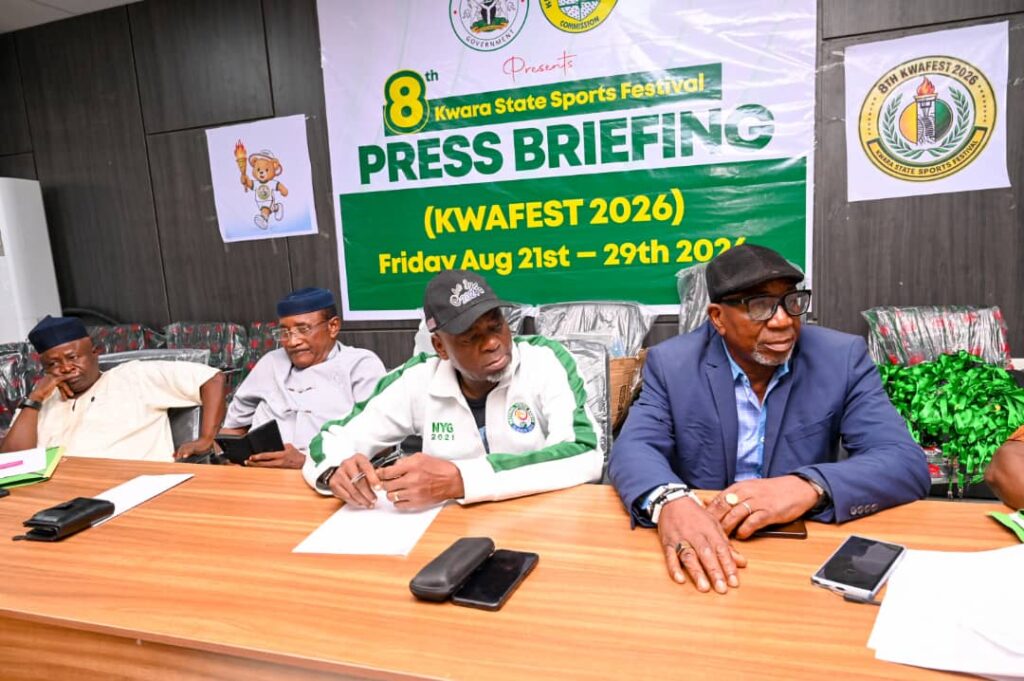
The decision to bring back the State Sports Festival was particularly significant because it restored the grassroots component of the state’s sporting structure. A sports ecosystem cannot depend exclusively on established clubs and senior competitions. It must have a foundation. That foundation is grassroots competition. The State Sports Festival provides precisely that.
The greatest long-term value of the festival may not be the medal table. It is the athletes who emerge from it. A properly organised state sports festival creates an enormous scouting pool. Athletes who might otherwise remain unknown can attract the attention of coaches, sports associations, schools, academies and talent scouts.
This is particularly important in an era when Nigeria is increasingly looking beyond traditional sports centres for young talents. The festival is as usual therefore, a bridge, community to Local Government to State Festival to National competition, to professional sport and to international representation. This 8th edition has same potential to strengthen that pathway.
The revival of a sports festival, however, is meaningful only when athletes have facilities in which to train and compete. This is where the AbdulRazaq administration’s investment in sports infrastructure becomes particularly important. One of the most visible interventions has been the rehabilitation and upgrading of the Indoor Sports Hall at the Kwara State Stadium Complex in Ilorin.
Government described the project as part of its effort to reposition Kwara for sports development and international sporting engagements.
Government budget-performance documents also show substantial allocations for the renovation of the indoor sports hall and stadia at Offa and Lafiagi.
If the objective is grassroots sports development, facilities cannot be concentrated exclusively in the state capital. A young athlete in Kwara North or Kwara South should have a realistic opportunity to train and compete close to home.
Facilities are not merely concrete structures. They are sporting laboratories. A functional stadium provides a place for athletes to compete. A modern Indoor Sports Hall creates opportunities for sports such as basketball, volleyball, handball, badminton, table tennis, boxing and other indoor disciplines.
A properly maintained athletics facility gives young runners, jumpers and throwers somewhere to train. Football pitches provide opportunities for the next generation of footballers. And community sports facilities make regular participation possible for young people who may never have the resources to travel to Ilorin. This is the wider significance of the infrastructure drive.
The facilities provide the physical environment necessary for the State Sports Festival to become sustainable rather than an event that comes and disappears every few years. The festival as a tool against youth restiveness
There is also a social dimension. Thousands of young people across Kwara are potential athletes, but without structured sporting activities, their energy can easily be diverted into less productive pursuits. Sports provides discipline. It teaches teamwork, perseverance, leadership, responsibility and respect for rules. A young athlete learns to win without arrogance and lose without giving up.
At a time when governments are searching for practical ways of engaging young people, sporting competitions such as the State Sports Festival provide an important platform. The 2020 organisers specifically identified the reduction of social vices among youths as one of the benefits of the festival. That objective remains relevant today.
Another important benefit is unity. Kwara is geographically diverse, with communities spread across the three senatorial districts. The State Sports Festival brings these communities together under one sporting umbrella. For seven days, the differences of geography, language, political affiliation and local identity give way to a common identity, Team Kwara.
These encounters create friendships and relationships that can endure beyond the festival. In that sense, the competition is also a festival of unity.
Perhaps one of the most strategic advantages of restoring the State Sports Festival is its connection to the state’s participation in national competitions. Kwara’s recent performances at national sporting events have strengthened the argument that the state can compete at the highest level when its talents are properly identified and supported.
The State Festival provides the scouting mechanism. The Kwara State Sports Commission provides the administrative structure. The various Sports Associations provide technical development. The athletes provide the talent. And government investment provides the infrastructure and resources. When these elements work together, the result can be a sustainable sporting pipeline.
But there is one major lesson from the history of the Kwara State Sports Festival. Continuity matters. The 15-year interruption between the sixth and seventh editions was costly. A generation of athletes lost the opportunity to compete in the state’s premier grassroots multi-sport competition.
The challenge now is to ensure that history does not repeat itself. The 8th edition should therefore, not be regarded as an isolated event. It should be the beginning of a predictable sporting calendar. Young athletes should know that there will be another edition. Coaches should know that they have a regular platform for talent identification. Local Government Sports Coordinators should be able to prepare their athletes months in advance.
Sports Associations should use the festival to build databases of emerging athletes. And the state should maintain the facilities after the closing ceremony. That is how a festival becomes an institution.
There is also an economic argument. A vibrant sports ecosystem creates jobs. Coaches, referees, technical officials, event managers, physiotherapists, sports journalists, photographers, equipment suppliers, transport operators, hospitality businesses and vendors all benefit from major sporting activities.
A successful State Sports Festival can therefore, generate economic activity beyond the stadium. If properly packaged, the event can also attract sponsors and private-sector investment.
This is where the government’s role becomes increasingly important, not necessarily to fund everything indefinitely, but to create an environment in which private investment can flourish.
Governor AbdulRazaq’s sports intervention will ultimately be judged not merely by the number of facilities commissioned or the amount spent. Its real test will be what happens to Kwara’s athletes over time. If today’s investments produce athletes who win national and international medals tomorrow, then the facilities will have fulfilled their purposes.
If a young athlete discovered at the 8th State Sports Festival eventually represents Nigeria at the Olympics, Commonwealth Games, African Games or World Championships, the significance of the festival will be immeasurable. That is the potential legacy.
The 8th Kwara State Sports Festival therefore, arrives at an interesting moment. It is not returning to the same Kwara that hosted the 7th edition in 2020. The sporting environment has changed. The state has witnessed renewed investment in facilities, a stronger emphasis on grassroots development and growing ambitions for Kwara to become a major sporting destination.
The upgraded Indoor Sports Hall is now available as part of that renewed infrastructure base, while government plans and investments have extended attention to sporting facilities beyond Ilorin. The festival itself must now rise to the occasion. Its organisation must be professional.
Results must be properly documented. Athletes must be followed up after the competition. Sports associations must develop those identified. And, most importantly, the facilities must remain active throughout the year. The greatest mistake would be to spend money preparing magnificent facilities for a festival and then allow them to become underutilised afterwards.
The story of the Kwara State Sports Festival is, ultimately, a story of interruption, revival and opportunity. The early editions established a tradition. The long years of inactivity demonstrated the danger of discontinuity. The 7th edition in 2020 brought the tradition back. The 8th edition now has the opportunity to consolidate it. And the infrastructure investments under Governor AbdulRazaq provide an important physical foundation upon which the next chapter can be built. For Kwara, the objective should be bigger than hosting eight editions.
It should be about creating a system that can continuously discover, nurture and produce champions. The State Sports Festival must become the starting line for the state’s sporting ambitions, not the finishing line.
When the athletes march into the stadium from tomorrow, they will be carrying more than the flags of their Local Government Areas. They will be carrying the hopes of a state that once built a reputation as a sporting hub, lost some of its momentum, and is now attempting to reclaim its place. The medals will matter. The records will matter, and the champions will matter.
But the greatest victory will be if the 8th edition succeeds in ensuring that the young boy or girl who steps onto the field today will have a clear sporting pathway tomorrow. That is when the Kwara State Sports Festival will have truly come of age.
And that is perhaps the most enduring measure of Governor AbdulRazaq’s sports legacy, not simply the facilities he leaves behind, but the athletes and sporting institutions that those facilities make possible.