




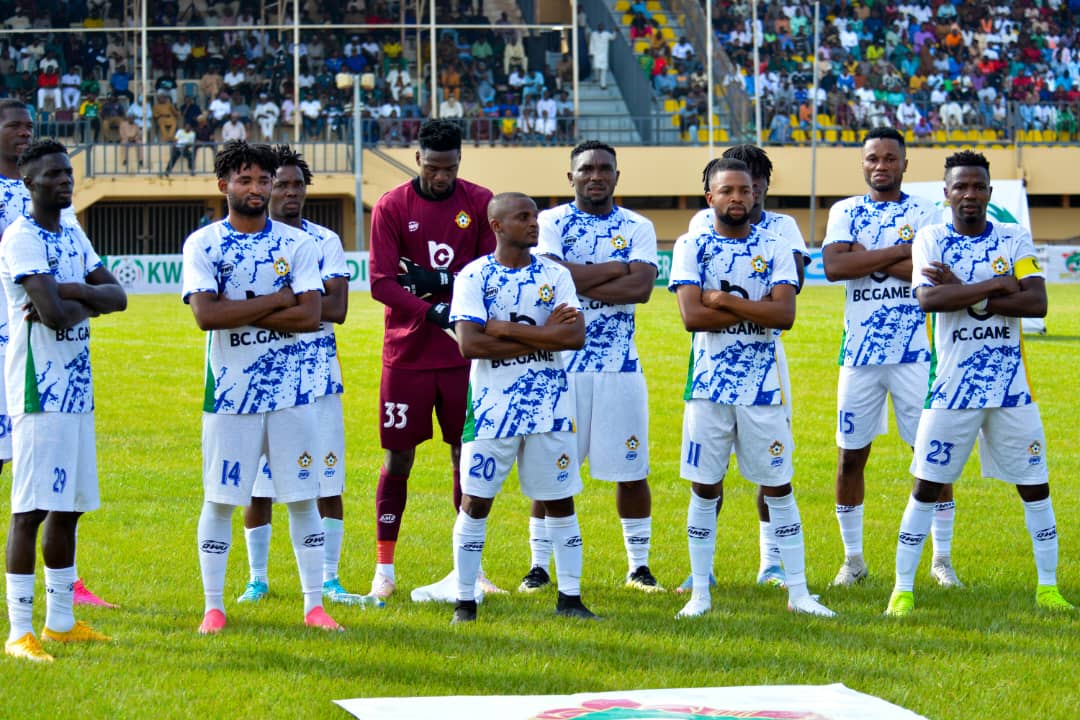
The establishment and sustenance of Kwara United Football Club is obviously a fraction of the larger football development and promotion system of not only the state or country. It’s beyond that. It’s helping in enhancing the environmental values of the round leather game in the globe.
Ever since the introduction of the club, which was as a result of the early consciousness of the state in the game, players, both from home and abroad, likewise coaches and managers, have passed through the super parastatal, all in the bid to further enhance personal and collective reputations.
Some have left behind them positive impacts, which are being celebrated intermittently with or without sentiments, while others have done otherwise, and are equally being talked about as time permits.
Been a complete traditional team, Kwara United, arguably, is being subjected to factors that are purely environmental, and that have continued to limit its growth to the extent that it would be difficult to measure success and achievements over time, due to multiple interests that are more detrimental than promotional.
Kwara United is like a problem child, as the club has become synonymous with problems that have continued to bring it to public scrutiny and debate almost every day. Each management is being subjected to a series of criticisms that are obviously being hatched to bring them down, irrespective of the rosy side of their reign.
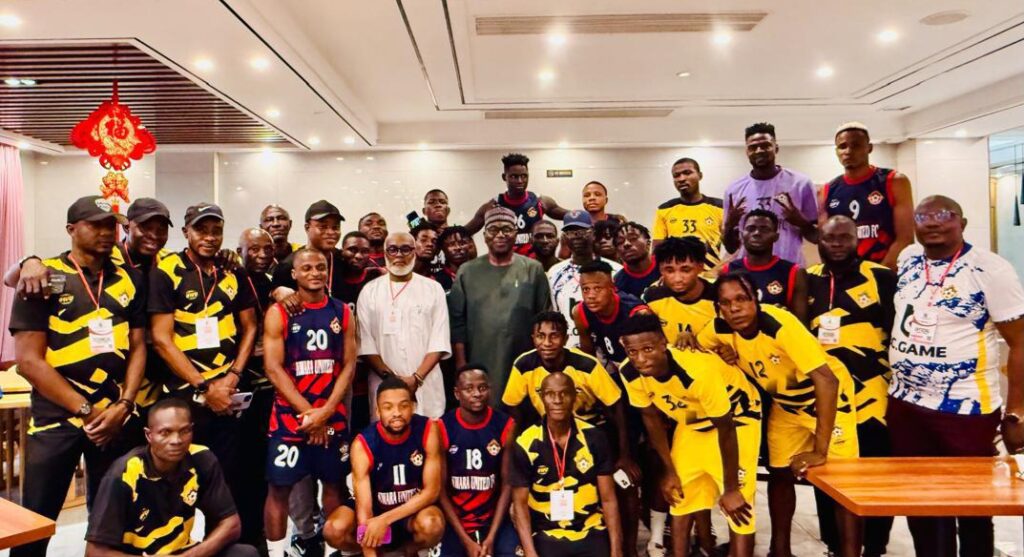
However, some fundamental facts must be considered. First, Kwara United is a professional side, and everything in and around it must be viewed as such, irrespective of the perceptions of the so called ‘opposition.’ Secondly, the popularity of the game of football has made the club a wholesome evil that we cannot do without, because of its socio-economic values, and that hard evidence has continued to place the team above and over whatever sentiment, within and without.
Nevertheless, management structure and government policies, which constitute some bottlenecks, cannot be wished away, because it’s a purely government financed outfit.
That the club, just like the majority of other clubs in Nigeria, has no facility of its own has also limited its freedom, especially on the usage of those facilities as and when due.
Successive governors and governments in the state have continued to accord the team its right of place based on different perceptions of each government, vis-a-vis the availability of time and resources at any point.
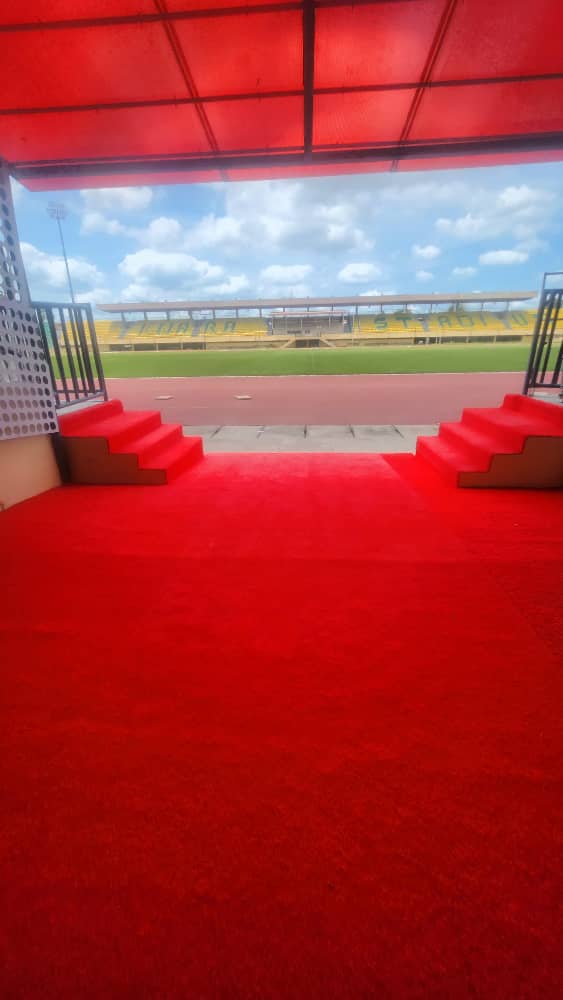
The qualification of the team for the 2025/2026 CAF Confederation Cup following its triumph in the President Federation Cup, the first time in the history of the club, necessitated the renovation and upgrade of the Main-Bowl of the Stadium, and that has opened additional challenges, not for the team alone, but for the managers of the facility, that’s the Sports Commission, as well as the Kwara FA and other football stakeholders, which comprise the other teams in the state, irrespective of their cadre.
Just like the vision that the Kwara FA shared through its chairman, Alhaji Idris Abdullahi Musa Thuraya, in analyzing the ongoing renovation, “the renovation and upgrade are also to bring the facility to the mainstream in hosting national and international football competitions. This will equally broaden the revenue windows for the state.
Governor AbdulRahman AbdulRazaq must therefore, be commended for embarking on the upgrade of the facility, which goes in line with given specifications that are beyond mediocrity class.
Coming with the new status of the facility following the facelift are new hiring fees, which went up by over 100 percent, and restrictions placed on the usage of the Main-Bowl, which have created serious operational challenges for Kwara United and other local users.
First, that the facility upgrade, which is being supervised by the Kwara State Football Association, was subjected to these challenges calls for serious questions. We must respect football development culture in the state through the stakeholders before just announcing a hike in price and placing restrictions. That the Sports Commission controls the facility shouldn’t undermine or devalue the integrity of the users. We must take into full consideration the social responsibility side of government’s activities.
Again, apart from the football friendly side of the stadium, which other facility was fashioned to get revenue for the government, including the eight glass-back squash courts that were built with over N200 million. That’s the power of football, which must be respected.
Also, if Kwara United is to pay as much as N350, 000 to play a single match, which has been registered as their traditional home ground for the league, at least, they should be allowed some periods to train on the facility in preparation for the said kò match.
That Kwara United, which traditionally trains and plays its home matches at the Main-Bowl was forced to train in another venue in preparation for a match seems a bit unprofessional. The development will, no doubt, disrupt the club’s training routine and affect players’ adaptation to their home environment. This is football. The pitch they should use must match the Main-Bowl’s quality, not just any substandard pitch. And that was why it’s mandatory for any away team to train once on the pitch that matches will be played on before the match.
Kwara United’s performance in the Nigeria Premier Football League (NPFL) and any future continental engagements must be jealously guarded and supported by all, irrespective of our affiliations, which should always be relegated in the face of a state project. Kwara United is a state project, not a family affair or group property.
While the facelift is commendable, the implications for Kwara United Football Club and the broader football ecosystem in the state are raising growing concerns.
For years, the Main-Bowl has served as the home ground and training base for Kwara United. It has also been a lifeline for grassroots clubs, school teams, and private sports organizations.
The stadium’s accessibility made it a melting pot of football talents and a hub of community engagement. But since renovation works began, and especially with the restriction placed on training activities, the club and several users have faced logistical challenges that could have long-term effects.
Beyond performance, the club’s preparation for league matches shouldn’t be undermined. For a team that has been striving to regain continental relevance, the inability to train under familiar turf conditions poses a psychological and technical disadvantage.
It’s on record that the club last season, maintained the said Main-Bowl pitch for six months without reimbursement. The club equally contributed fertilizer to assist Kwara Football Academy in the treatment of their pitches.
Coming with this controversy is the exorbitant increase in the stadium’s hiring fee, from about ₦150,000 to ₦350,000 per match or event. According to findings, the Sports Commission said that the new rate reflects the cost of maintaining upgraded facilities.
Also coming on the heels of all these are other sets of criticisms heaped on the management of the club, which, as usual, normally accompany any controversial issues. Some stakeholders raised issues surrounding the sack of Coach Tunde Sanni, interference on technical matters, sponsorship, management structure, and borrowings.
Six years ago, it’s on record that Kwara United’s very first memo was to Governor AbdulRahman AbdulRazaq, through the then Ministry of Sports and Youth Department, seeking to develop its own training pitch. The ministry wrote to His Excellency that it was a capital project to be handled by it. Some of these officials are here today, with the Sports Commission, and can testify to this.
The club recently reconstructed a training pitch with donations and funds from the club, beside the Swimming Pool Complex, and efforts are being made to complete it after the season.
On sponsorship money, the contract was duly signed and forwarded to the Sports Commission before it was made public. And on allegations of borrowing, the club always seeks the Sports Commission’s approval before embarking on such an adventure. All these are respecting the structural pattern put in place to supervise the operations of the club.
The club has, so far, not been indicted by either the Nigeria Football Federation (NFF) or the NPFL for breaches concerning players or coaches status as regards owing any staff. All its contracts are vetted by the NPFL. And on the home front, the club’s accounts and financial dealings have always been vetted by Auditor General’s Office and also by external auditors. Allegations of financial rascality in whatever form are, therefore, baseless.
For a team to ask its technical advisor, who won its very first President Federation Cup competition, to step aside after just a few matches into the NPFL season and elimination from the CAF Confederation Cup in the preliminary rounds calls for thorough investigation and consultation, not public condemnation. After all, the same management hired the coach. And the incidents that followed that have pointed to the fact that the management has never interfered with the technical crew’s activities, as being touted by some.
Kwara United has come to stay, and it’s an evil that we must deal with, no matter the circumstances and the management that’s in charge at any time. With or without sentiment, this current management has changed the narratives for the better since taking over, going by previous records, as we all know.
Back to the issue of the stadium hire price hike, renovation should not mean restriction. If the stadium becomes too expensive for local users, it defeats the essence of sports development. The renovation undoubtedly represents progress, but it’s believed that government and sports administrators must adopt an inclusive policy that allows wider access. A tiered fee structure that distinguishes between professional clubs, grassroots teams, and community sports could help achieve this balance.
The hike will have negative implications for football development in the state. For smaller clubs, academies, and private sports promoters, the hike has made it almost impossible to access the facility. Events that once brought the sporting community together have dwindled, as organizers seek cheaper alternatives, often in substandard venues.
The renovation of the facility, no doubt, marks a new era for sports in Kwara. The re-grassed pitch, improved seating, and better drainage system will elevate the facility to national and possibly international standards. Yet, modernization must be balanced with inclusivity.
At its core, the Kwara Stadium renovation reflects a government determined to revive sporting excellence. But the ripple effects of restricting access and raising fees could stifle the same development goals it seeks to achieve.
For Kwara United, continuity and stability are key to performance. For the community, affordability, and access sustain the culture of sports participation.
The Main-Bowl has long been the heartbeat of football in Kwara State, home to Kwara United, and a host of grassroots tournaments and developmental programs. However, the new fee regime represents a staggering 139 percent increase, a change that could price out several local clubs and academies.
For many, the sudden jump appears too steep in a period when football clubs, especially at the grassroots, are struggling with rising operational expenses and limited sponsorship.
Playing in the iconic stadium has always been a source of pride and motivation for young players, a rare opportunity to feel part of the bigger football dream.
A reduction in match frequency or attendance, prompted by higher operating expenses, could translate into lost income for hundreds of people around the complex. Every weekend game means something. Football is a livelihood. Developmental football must not be priced out of existence.On the whole, the fee hike at the Main-Bowl of the Kwara Stadium is a classic example of a policy caught between two imperatives. Financial sustainability and football development. While the intention to maintain high standards is commendable, the approach must be inclusive.