







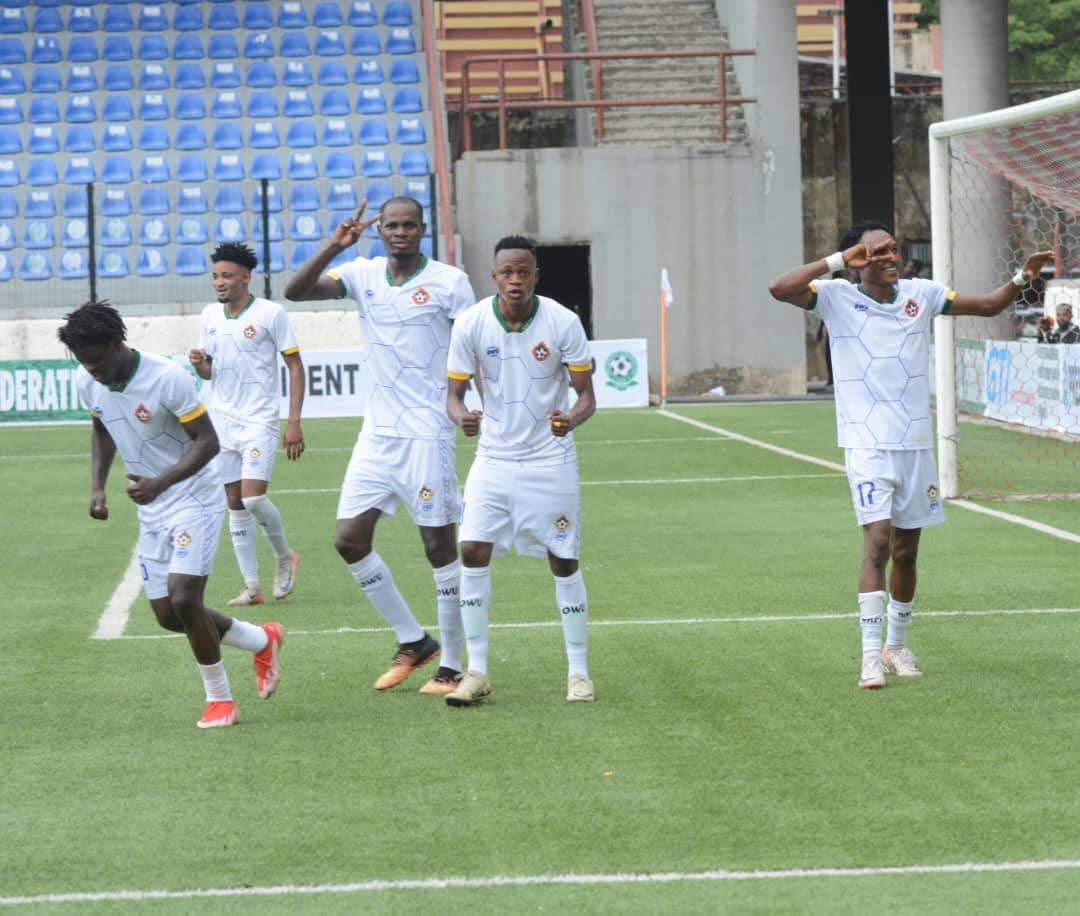
The decision of the Nigeria Premier Football League (NPFL) to deduct three points and three goals from Kwara United, in addition to imposing a ₦9 million fine over the recent fracas involving Rivers United, raises serious concerns about proportionality, consistency and the broader interest of the league.
No one will defend disorder in our stadiums. Violence, intimidation or breakdown of security must never be condoned. Clubs have a duty to control their supporters and ensure match officials and visiting teams are protected. On that, the NPFL is right to take a firm stance.
However, discipline must not only be firm. It must also be fair.
Imposing a heavy financial sanction of ₦9 million already sends a strong message.
For most Nigerian clubs operating on lean budgets, that figure is significant enough to serve as both punishment and deterrent. To then proceed with a three-point and three-goal deduction appears excessive and punitive beyond necessity.
Points deductions are among the harshest sporting sanctions available. They directly alter league standings, affect survival battles, continental aspirations and the morale of players who had no hand in the misconduct.
When such a measure is applied alongside a substantial monetary fine, it creates the impression of double jeopardy.
At a time when the league is battling for credibility, fan engagement and commercial growth, decisions perceived as disproportionate risk deepening mistrust between clubs and the league body.
Supporters may begin to see disciplinary rulings not as corrective measures, but as instruments capable of determining outcomes off the pitch.
Moreover, consistency is key. The NPFL must demonstrate that similar incidents in the past, or in the future, attract identical sanctions. Without clear, transparent benchmarks, disciplinary actions become vulnerable to accusations of bias or selective justice.
For the past eight or nine years, there hasn’t been any violence at the Kwara State Stadium linked to either the Harmony Boys or any team in the state, which is enough premise for the NPFL to reverse the points deduction. That this same Kwara United had lost two matches in the ongoing season at this same stadium with the same fans applauding the visitors also speaks volume of the level of provocative display by the hungry and illiterate officiating officials that handled the last two matches against Kano Pillars and Rivers United.
The incident involving Rivers United was unfortunate and condemnable. Yet punishment should seek reform, not destruction. A heavy fine, stadium closure, or mandated security upgrades would have sufficiently addressed accountability without distorting competitive balance.
Football thrives on fairness. Results should primarily be decided on the pitch, not in committee rooms.
The NPFL must therefore, reconsider the cumulative severity of its ruling. Discipline is necessary, but so is equity. If the league truly seeks growth and integrity, its justice must be firm, measured and visibly impartial.
Kwara United deserve to be sanctioned if found culpable. But they also deserve fairness.
In the interest of Nigerian football, this decision should be reviewed.
Even at that, what tangible positive result have these heavy sanctions truly produced?
Week after week, the hammer falls, fines imposed, stadiums closed, points deducted, yet the same controversies persist.
Officiating errors remain glaring, tensions continue to rise, and supporters feel increasingly alienated rather than reassured. Punishment without structural reform only scratches the surface of a much deeper problem.
The NPFL must look inward and honestly review its strategies. Are referees receiving adequate training? Is there proper evaluation and accountability? Are match officials psychologically and financially supported to perform professionally? Until these fundamental questions are addressed, sanctions alone will not restore credibility.
Fans, though never justified in resorting to violence, often react out of frustration to what they perceive as repeated provocations, questionable calls, inconsistent decisions, and a seeming lack of consequence for erring officials.
The narrative on the terraces is simple: fairness first. When trust in officiating erodes, emotions overflow.
The Nigeria Football Federation (NFF), on its part, appears to be doing its best to stabilize and reform the system within the limits of available resources.
However, sustainable progress requires collaboration, improved referee education, transparent disciplinary processes, and deliberate fan engagement initiatives.
Sanctions may deter in the short term, but only systemic reform will produce lasting positive results. Nigerian football deserves credibility built not on fear of punishment, but on fairness, professionalism, and accountability.