





By the time AFCON 2025 ended in Morocco, one thing was clear: The loudest voice at the tournament wasn’t the fans. It wasn’t the players nor even even the goals and the colourful celebrations that goes with them. It was the whistle, coued with the Video Assistant Referees (VAR).
From day one to the final night in Rabat, refereeing didn’t just influence games. It defined the tournament. And not in a good way.
AFCON 2025 had talent, tempo and tactical growth. But what it will be remembered for is something far less flattering: confusion, controversy and credibility issues. AFCON 2025 was absolutely a tournament of talent, tainted by whistles.
Just like the previous editions, AFCON 2025 in Morocco was meant to be a celebration of African excellence: packed stadiums, rising stars, tactical evolution and continental pride. Instead, from the opening day to the final night, the tournament became a rolling referendum on refereeing, credibility and governance in African football.
It was not one mistake. It was a pattern.
Controversy did not wait for the knockout rounds. In the group stages alone, several matches raised eyebrows over: inconsistent VAR use, soft penalties awarded in key moments, and red cards given in similar situations where others escaped punishments.
Players, coaches and fans across the continent complained, not always about losing, but about not knowing what the standard was anymore.
When the same type of foul is a penalty in one match and “play on” in another, football stops being a sport and starts becoming a lottery.
As the tournament deepened, so did suspicion. Host nation Morocco’s matches came under heavy scrutiny, with rival teams openly questioning whether referees were insulated from pressure.
Even when decisions were technically correct, the lack of transparency and the uneven application of VAR created doubt. And in football, doubt is poison. By the semi-finals, the conversation had shifted: Not “who will win AFCON(?)”, but “will the referee decide it?”, and there were loud claims in different quarters that the competition was being rigged for host Morocco.
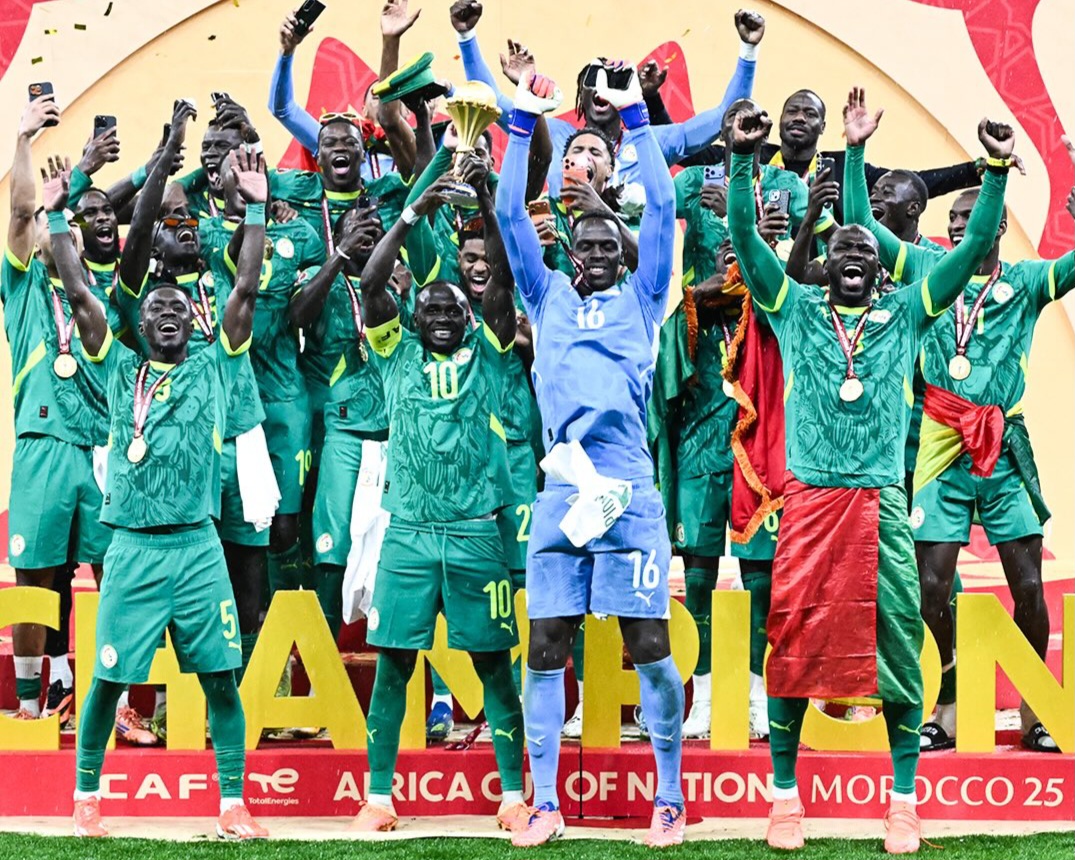
The final between Senegal and Morocco should have been history. Instead, it became a warning. A disallowed goal, a late VAR-assisted penalty, layers protesting, a brief walk-off, crowd unrest and global embarrassment.
The match eventually ended, but AFCON 2025 did not, because the fallout spilled into press conferences, government offices, and the court of public opinion. That night in Rabat, African football did not look united.
It looked uncertain.
CAF President, Patrice Motsepe condemned the disorder and promised disciplinary action. He spoke about protecting the image of African football and ensuring better standards going forward. But many within the game quietly asked: Why did it take chaos before action?
Motsepe and the Confederation of African Football (CAF) issued a strong rebuke following the chaotic scenes at the final, particularly the walk-off by some Senegalese players and officials in protest of a late decision:
“CAF strongly condemns any inappropriate behaviour which occurs during matches, especially those targeting the refereeing team or match organisers.”
This statement made clear that such conduct does not uphold the values of fair play and respect that African football stands for. CAF emphasized it was reviewing all match footage and will forward the matter to the relevant disciplinary bodies for appropriate action against those found responsible.
Motsepe stressed in CAF’s official response that the incidents were serious and would not be overlooked:
CAF is reviewing all available footage of the incidents from the final and will refer the case to competent bodies to determine appropriate disciplinary measures for those found guilty of misconduct.
This reflects Motsepe’s stance that while the final result stands, CAF must uphold the Laws of the Game and the Confederation’s codes of conduct, and that deviations must be examined and addressed.
Though specific quotes from Motsepe on the final result itself (e.g., congratulating Senegal or addressing Morocco) are not widely published yet, the official CAF position under his leadership conveyed the following key points:
Respect for match officials, opponents, and CAF protocols is non-negotiable. The walk-off and misconduct were categorically condemned.
The outcome of the match (Senegal’s 1–0 win) remains part of history, but conduct on the field will be reviewed under the CAF disciplinary framework.
CAF expects teams and officials to obey the Laws of the Game at all times, even in emotionally charged situations.
This AFCON final was highly controversial, featuring a late penalty decision for Morocco that triggered protests, a temporary walk-off by Senegal players and staff, and eventual extra-time play in which Senegal scored the winning goal — scenes that CAF under Motsepe acknowledged as not befitting the sport’s standards.
FIFA President Gianni Infantino was firmer, calling the scenes “unacceptable” and stressing that respect for referees and competition integrity is non-negotiable. Both leaders spoke, but for fans and professionals alike, the real test is whether CAF will move beyond statements into structural reform.
“We strongly condemn the behaviour of some ‘supporters’ as well as some Senegalese players and technical staff members. It is unacceptable to leave the field of play in this manner.”
He emphasised that such behaviour should never be tolerated in football.
“It is also the responsibility of teams and players to act responsibly and set the right example for fans in the stadiums and millions watching around the world.”
Infantino underscored the need to respect match officials and the Laws of the Game, regardless of the importance of the match.
“We must always respect the decisions taken by the match officials on and off the field of play. Teams must compete on the pitch and within the Laws of the Game, because anything less puts the very essence of football at risk.”
He stressed that walking off the pitch is not a valid form of protest and has no place in the sport.
“It is unacceptable to leave the pitch in this manner, and equally, violence cannot be tolerated in our sport, it is simply not right.”
Infantino indicated he expected CAF’s relevant disciplinary bodies to respond appropriately to the incidents that marred the final.
“The ugly scenes witnessed today must be condemned and never repeated… I expect that the relevant disciplinary bodies at CAF will take the appropriate measures.”
Although his focus was on the misconduct, Infantino also congratulated Morocco for hosting a strong tournament:
He acknowledged Morocco as “exceptional hosts” and praised the overall success of the competition, which was seen as important preparation for the 2030 FIFA World Cup they will co-host.
The biggest casualty of AFCON 2025 was not a team. It was trust. Trust in referees, trust in VAR, trust in CAF’s appointment system and trust in competitive fairness.
When players walk off and fans riot, it is not just emotion, it is a signal that people no longer believe the system will protect the game. And once trust is gone, football loses its soul. And it’s a huge implications for African football.
AFCON 2025 sends three loud messages to CAF: First, referees must be better trained, better protected, and better monitored. Secondly, VAR must be consistent, transparent, and accountable. And also, appointments must be insulated from political, national or host pressure. Africa cannot sell excellence to the world while struggling with fairness at home.
If CAF learns from this and reforms follow, AFCON 2025 may become the tournament that saved African football’s integrity. If not, it will be remembered as the one that exposed it. CAF can’t sweep AFCON 2025 under the carpet. This tournament demands reform. Africa’s football has outgrown casual administration. The talent is elite. The governance must catch up.
FECAFOOT (Cameroonian Football Federation) President Samuel Eto’o’s public reactions to the refereeing controversies at AFCON 2025 was loud and clear.
Samuel Eto’o, who served not just as FECAFOOT President but also as a key voice in CAF’s technical circles acknowledged that officiating mistakes impacted matches during AFCON 2025. While he stopped short of outright accusing referees of bias or misconduct, he stressed several key points in interviews after the tournament.
He said that there were “events that will remain etched in our minds” regarding refereeing decisions in Cameroon’s quarter‑final match against hosts Morocco, hinting that significant errors affected the flow of the game and the emotions of teams and fans. He admitted the pressure of the moment led even to suggestions that he might withdraw his team, though he refrained from doing so.
On the AFCON final’s chaos involving Senegal’s brief walkout, Eto’o again struck a balanced tone. He congratulated Senegal on their victory yet called on CAF to improve officiating and match governance so that such incidents “will not happen again.” He emphasized that referees are human and that clearer video review and accountability would help manage emotions and controversies better.
Eto’o’s reaction went beyond words on TV. During Cameroon’s quarter-final loss to Morocco, he was visibly frustrated with the officiating, gesturing angrily from the stands toward match officials and neighbouring federation representatives. This conduct led to CAF’s disciplinary sanctions against him, including a four‑match ban from CAF matches and a fine, which FECAFOOT described as unjust and raised concerns about procedural fairness.
AFCON 2025 had moments of magic.
But history will remember the MESS. This tournament should not just end a season. It should start a reckoning, because if African football wants global respect, it must first fix its own house, and make sure next time, the whistle supports the game.
In Morocco, destiny met politics.
What was witnessed was not football. It was a compromised CAF system, one that appeared determined to tilt the balance in favour of Morocco, regardless of fairness, merit, or the spirit of African unity. And Africans were left wondering whether the outcome had already been decided long before the matches were played. But in the final day, the ‘God of soccer’ smiled at Senegal.