







The conclusion of the 2025/2026 Nigeria Premier Football League (NPFL) season brought mixed emotions to followers of Kwara United Football Club.
A campaign that began with optimism ended in anxiety, as the Harmony Boys fought until the final day to secure their top-flight status. Understandably, supporters, fans and stakeholders have raised questions about the club’s performance and the direction of its management.
However, while criticism is part of football, a fair assessment of Kwara United’s recent history reveals a bigger picture, one that places the administration of the Chairman, Kumbi Titiloye among the most impactful in the club’s modern era.
Football seasons are often judged by immediate results, but the true measure of leadership is the ability to build sustainability, maintain stability and create structures that outlive temporary setbacks.
Before the emergence of the current administration, Kwara United had become synonymous with frequent relegation battles and instability. The club often moved between divisions, struggling to establish itself as a consistent NPFL side.
Under Kumbi Titiloye’s leadership, however, Kwara United have remained a top-flight club, avoiding the cycle of promotion and relegation that previously defined the team’s fortunes.

The club has sustained its NPFL status for consecutive seasons, a feat that should not be taken for granted in a league where several established clubs have disappeared from the elite division.
While the 2025/2026 campaign was undoubtedly disappointing, survival itself demonstrates resilience. Great clubs are not only judged by the trophies they win but also by their ability to survive difficult periods and emerge stronger.
The Kumbi Titiloye era has witnessed some of the most significant achievements in Kwara United’s history.
Most notably, the club secured qualification for continental football after finishing among the NPFL’s top sides, earning a place in the CAF Confederation Cup. It was a landmark achievement that reintroduced Kwara United to the African stage after years away from continental competition.
Even more historic was the club’s triumph in the 2025 President Federation Cup, the first major national trophy in Kwara United’s history.
The achievement etched the club’s name permanently into Nigerian football folklore and remains one of the greatest moments ever recorded by the Harmony Boys.
The administration also oversaw improvements in player recruitment, club visibility, branding and stakeholder engagement, while maintaining the team’s presence among Nigeria’s football elite.

However, the 2025/2026 season exposed several weaknesses.
The club struggled with consistency, suffered a managerial transition, and found itself battling relegation despite making additions to strengthen the squad during the campaign.
The replacement of Coach Tunde Sanni with long-serving assistant Ashifat Suleiman reflected management’s willingness to make difficult decisions in pursuit of improved results. Yet, despite the setbacks, Kwara United survived.
The team fought until the final day and retained its NPFL status, ensuring that the club remains among Nigeria’s football elite heading into another season. Survival may not have been the target, but it prevented a catastrophic relegation that could have undone years of progress.
Football supporters are passionate, and rightly so. They demand success, attractive football and trophies. But evaluating a football administration requires looking beyond a single season.
Under Kumbi Titiloye, Kwara United have achieved sustained NPFL membership, qualification for continental football, participation in the CAF Confederation Cup, historic President Federation Cup triumph, increased visibility and relevance in Nigerian football, stability in club administration, continued investment in player recruitment and technical development.
Few administrations in the club’s history can point to a similar combination of achievements.

The challenge now is not merely survival but progression. Kwara United must conduct a thorough review of the 2025/2026 season and address the factors that brought the club dangerously close to relegation.
Priority areas should include strengthening the squad with quality additions, retaining the club’s best performers, providing Coach Ashifat Suleiman and his technical crew with adequate support, improving scouting and recruitment, enhancing youth development structures, building stronger engagement with supporters and stakeholders and establishing realistic but ambitious targets for the next campaign.
Most importantly, the club must convert the lessons of this difficult season into motivation for a stronger future.
Every successful football club experiences difficult seasons. What separates strong institutions from struggling ones is their response to adversity.
The 2025/2026 season will be remembered as a warning sign for Kwara United. Yet it can also serve as a turning point.
Rather than focusing solely on the disappointment of a relegation escape, supporters and stakeholders should also remember the broader achievements recorded under Kumbi Titiloye’s watch.
From continental qualification to winning the club’s first major national trophy, the administration has already delivered moments that many previous generations of Kwara United followers could only dream of.
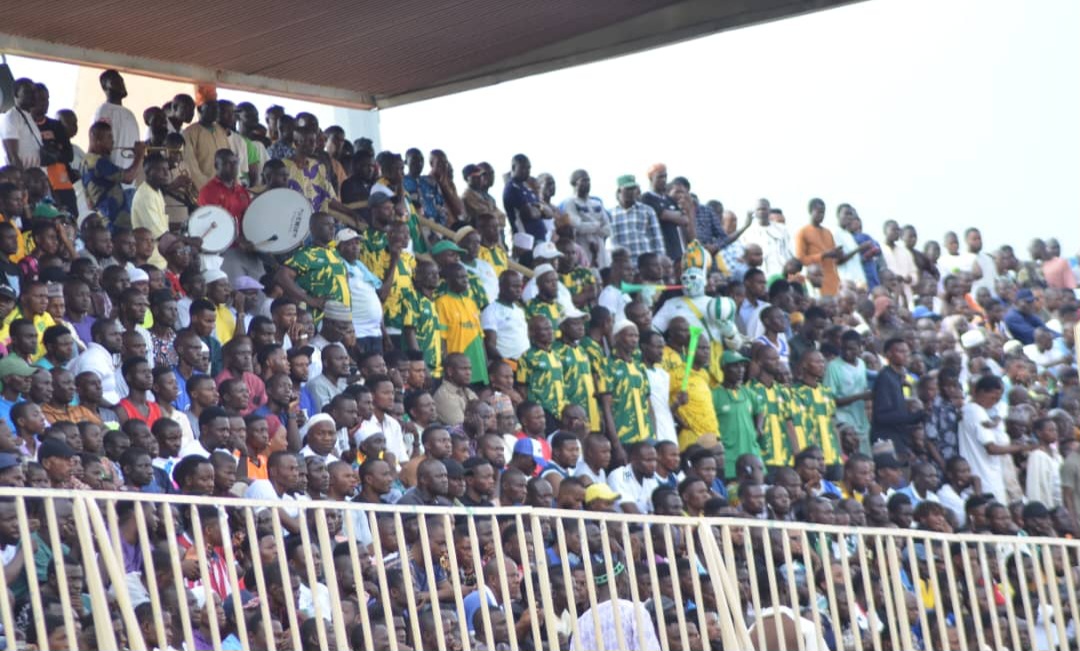
Against all odds, Kwara United survived a season of adversity. When the story of the 2025/2026 NPFL season is eventually written, Kwara United’s survival will rank among the most remarkable escape acts in the club’s history.
For many teams, relegation battles are defined by poor performances on the pitch. For Kwara United, however, the struggle extended beyond ninety minutes. The Harmony Boys spent much of the season fighting battles on multiple fronts, sporting, psychological and environmental, yet still found a way to preserve their place among Nigeria’s football elite.
It was a campaign that tested the resilience of players, coaches, management, supporters and stakeholders like never before.
The season began under the weight of heightened expectations following the club’s qualification for continental football and its historic President Federation Cup triumph. Supporters expected the team to build on those successes, but football rarely follows a predictable script.
Injuries, inconsistency and fluctuating form combined to make results difficult to come by. The team found itself trapped in a cycle of near misses and frustrating outcomes that gradually dragged it into the relegation conversation. As pressure mounted, every match became a battle for survival.
Like many clubs operating in a highly competitive football environment, Kwara United had to navigate internal challenges.

The technical crew came under intense scrutiny as results failed to match expectations. The eventual change in leadership within the technical department reflected the urgency of the situation, with Coach Ashifat Suleiman stepping into a more prominent role during a critical period of the season.
Players faced enormous psychological pressure as the fear of relegation grew stronger with each passing week. Confidence was often fragile, and every mistake appeared magnified by the circumstances.
Yet the dressing room remained united. Rather than allowing setbacks to divide the team, players and officials continued to fight for the club’s survival, with the support of the Kwara Football Association, management and some spirited stakeholders.
Beyond football matters, Kwara United also had to contend with circumstances that many supporters believed placed the club at a disadvantage. Perhaps, the most significant setback came when the club suffered the deduction of points and goals at a crucial stage of the season. With only a handful of matches remaining, eight matches, the sanctions dramatically altered the relegation equation and increased the pressure on the team.
What had already been a difficult task suddenly became even more demanding. For a side battling to stay afloat, losing valuable points so late in the season was equivalent to starting a race several metres behind its rivals.
Yet rather than surrender, the team responded with determination.
The club also experienced periods away from its traditional home environment. In Nigerian football, home advantage remains one of the most important factors in achieving results. Familiar surroundings, supportive fans and knowledge of local conditions often provide teams with a crucial edge. Any disruption to that advantage inevitably presents additional difficulties.
Playing under restrictive conditions meant that Kwara United sometimes had to seek results without the full benefits of its traditional support structure, placing extra demands on players and officials.
Throughout the campaign, there were moments when the club appeared to be operating under constant pressure from various directions. Criticism from sections of supporters, speculation in football circles, negative narratives and the growing expectation of failure created an atmosphere in which every setback was amplified. As the relegation battle intensified, distractions multiplied.
There were predictions that the club would go down….. mischievously.
There were suggestions that survival would be impossible, deliberately and jealously.
There were doubts about the management, the coaching staff and the players….. just to make jest.
Yet the team refused to be distracted by the noise.
What ultimately saved Kwara United was character. When many had written the team off, the players dug deep and produced results when they mattered most. The coaching crew continued to motivate the squad, while management maintained its belief that survival was achievable.
The club approached every remaining fixture as a cup final. Every point became valuable. Every goal mattered.
Every player understood the magnitude of the assignment. That collective determination gradually transformed hope into belief.
By the time the final whistle blew on the season, Kwara United had achieved what many considered unlikely. Despite inconsistent form. Despite internal difficulties. Despite setbacks. Despite points and goal deductions. Despite playing under challenging circumstances. Despite the pressure, distractions and predictions of doom. The Harmony Boys remained an NPFL club.
Their survival was not merely a football achievement; it was a demonstration of resilience, unity and perseverance.
The season exposed weaknesses that must be addressed if Kwara United are to avoid another relegation battle.
However, it also revealed strengths that should never be overlooked. The club showed courage under pressure.
The players demonstrated commitment. The technical crew displayed determination. Management remained steadfast during difficult moments. Most importantly, the entire Kwara United family proved that even when confronted by obstacles from within and without, surrender was never an option.
The task ahead is clear: learn from the mistakes, strengthen the team, rebuild confidence and ensure that the Harmony Boys return stronger.
The 2025/2026 season may not be remembered for trophies or continental exploits, but it will be remembered as the year Kwara United stared adversity in the face and refused to blink, against all odds, they survived.
For Kwara United, survival should not be the destination. It should be the foundation for a new chapter of growth, ambition and success. The ongoing re-organisation by the management may be a good way forward.