




When delegates of the Nigeria Football Federation (NFF) converge on Lafia, Nasarawa State, on September 26, 2026, for the federation’s elective congress, the exercise will be about much more than electing a President and executive committee members.
It will be a referendum on the state of Nigerian football, a verdict on the administration of the game over the last four years, and perhaps the most significant football election since the federation emerged from years of administrative instability.
The atmosphere leading to the election is already charged. Across football circles, from former internationals to club administrators, coaches, supporters, sports journalists and football investors, conversations have been dominated by one painful reality: Nigeria’s failure to qualify for two consecutive FIFA World Cups.
For a country that prides itself as Africa’s football giant and one of the continent’s most successful football nations, missing back-to-back World Cups has left a deep scar on the national psyche.
Historically, the Super Eagles have been Nigeria’s most visible sporting brand. Since making their World Cup debut in 1994, they have become regular participants on the global stage, missing only a handful of tournaments. Therefore, back-to-back failures have naturally intensified scrutiny of the football administration responsible for charting the country’s football direction.
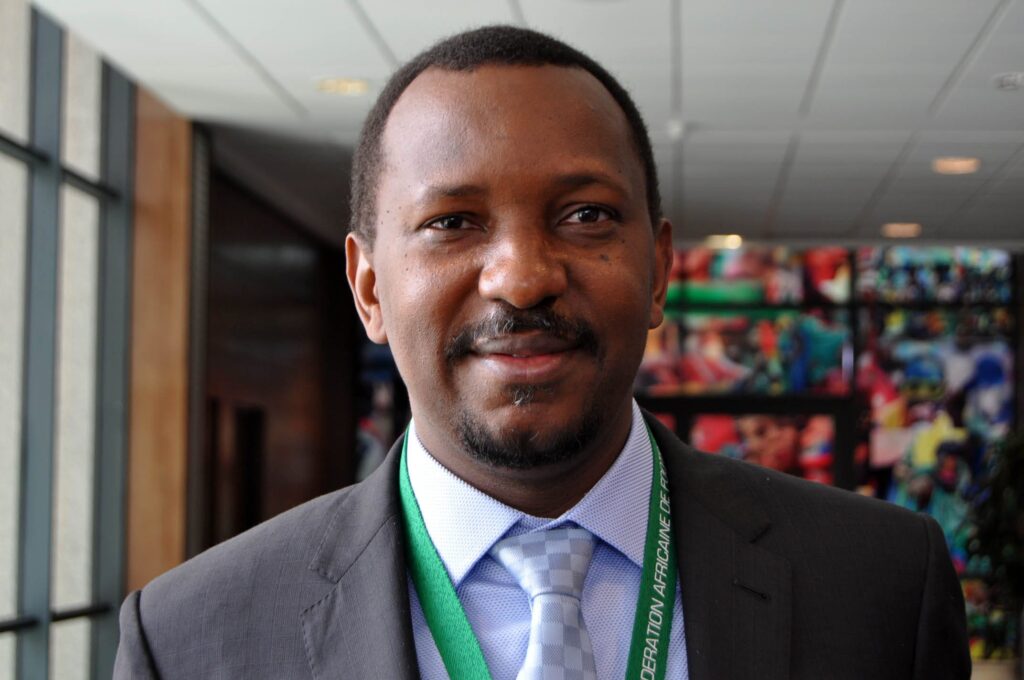
The disappointment is amplified by the fact that the Super Eagles have continued to produce world-class talents competing at the highest levels in Europe and beyond. Yet, despite the abundance of talent, Nigeria has found itself absent from football’s biggest stage. To many stakeholders, this contradiction points not to a shortage of players but to deeper administrative and structural challenges within the football ecosystem.
Consequently, the forthcoming elective congress has become a focal point for demands for change.
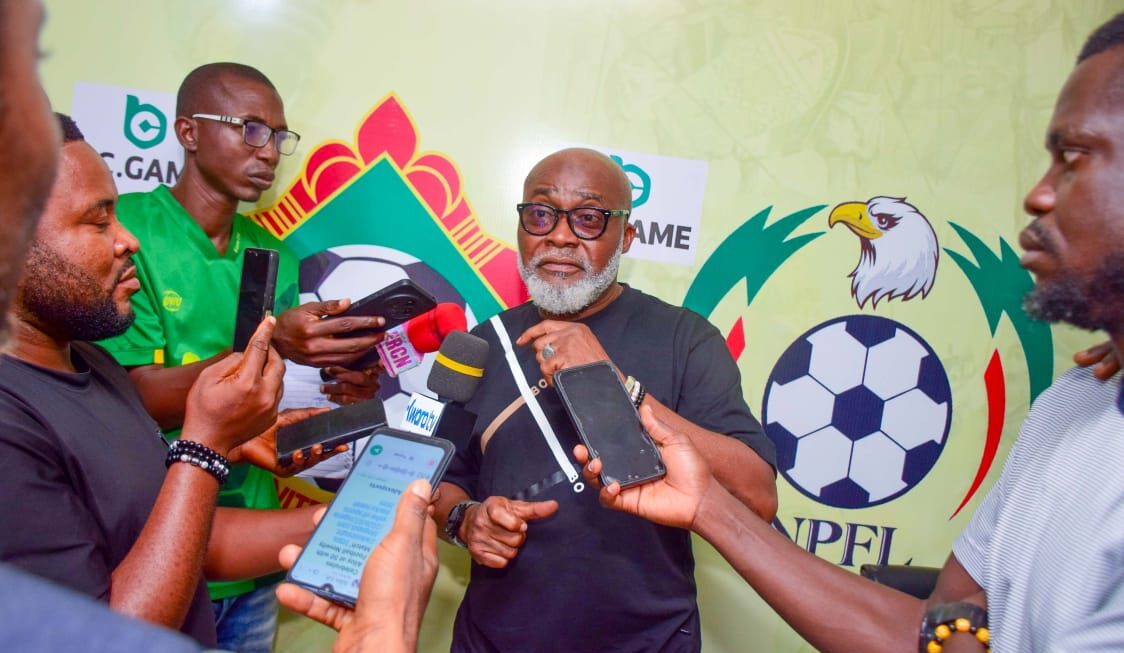
Stakeholders are increasingly insisting that the next leadership of Nigerian football must go beyond routine administration and embrace reforms capable of repositioning the game. It is within this context that recent comments by the Director General of the National Sports Commission (NSC), Hon. Bukola Olopade, have generated significant interest across the football community.
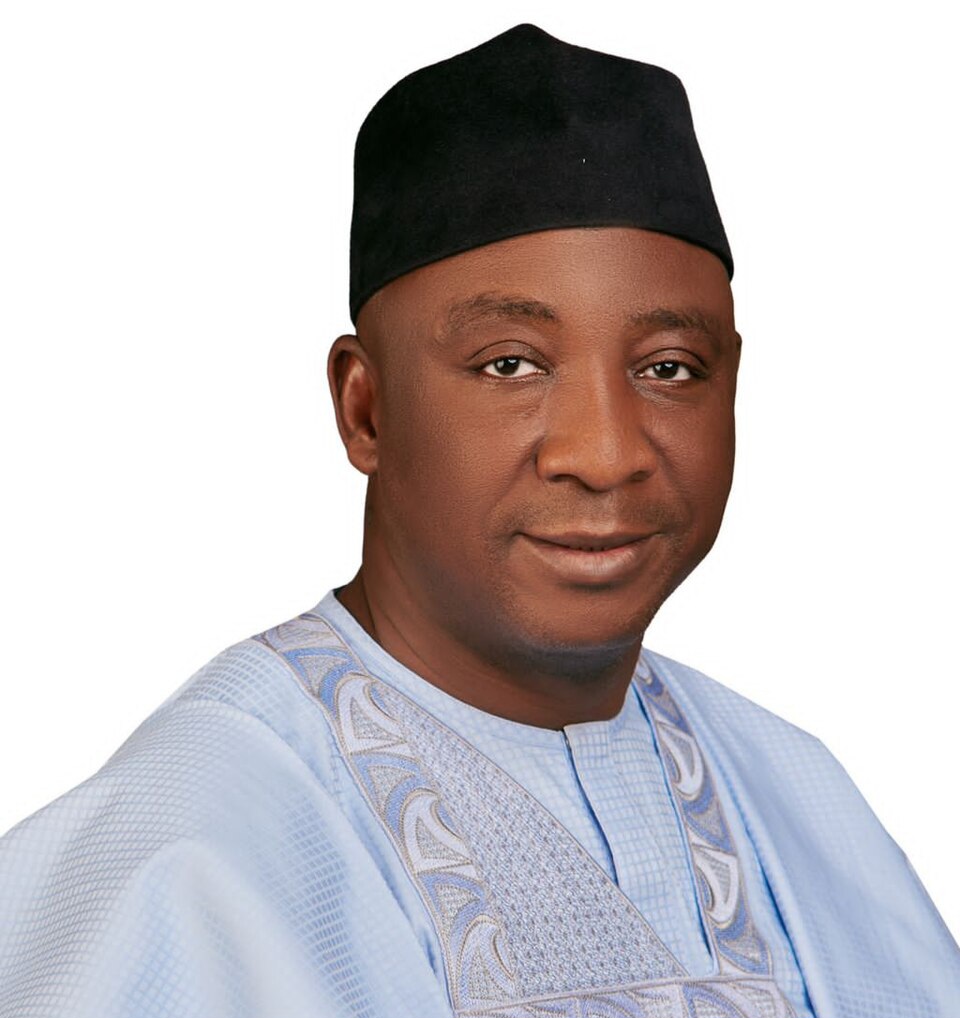
Speaking on the forthcoming elections, Olopade revealed that the Commission intends to engage the NFF and football stakeholders on proposed reforms and the statutes guiding football administration in Nigeria. His remarks were carefully worded, reflecting the delicate relationship between government institutions and football governing bodies.
“We cannot interfere or publicly take position because football has its statutes, but we will continue to engage stakeholders and support whoever emerges through the process,” Olopade stated.
His comments may appear diplomatic on the surface, but they reveal an important reality. The National Sports Commission is aware of growing dissatisfaction among stakeholders and recognises the need for governance reforms without violating FIFA’s strict regulations on government interference in football administration.
For decades, FIFA has maintained that national associations must operate independently. Any direct government intervention in football affairs can attract sanctions, including suspension. Nigeria itself has had several brushes with FIFA over governance disputes. Consequently, the NSC must tread cautiously, balancing legitimate calls for reform with the need to preserve the federation’s autonomy.
Interestingly, the reform conversation did not begin with Olopade. It had already surfaced prominently during the NFF Extraordinary General Assembly held in Yenagoa, Bayelsa State, in March 2026. At that Congress, delegates approved amendments to the NFF Statutes, Electoral Code and Standing Orders of the General Assembly while also fixing September 26, 2026, as the date for the elective congress in Lafia.
The significance of those amendments cannot be overstated. The Congress effectively acknowledged that the legal and administrative framework guiding Nigerian football required updating.
Even more revealing was the position of NSC Chairman and former NFF First Vice President, Alhaji Shehu Dikko, who openly declared that the 2010 NFF Statutes had become obsolete.
According to Dikko, the statutes were no longer fit for purpose and did not reflect modern governance realities. His comments echoed sentiments that have been expressed quietly within football circles for years. Many stakeholders believe the current governance framework has failed to evolve at the same pace as global football administration.
Yet the question remains: how far can reforms go without fundamentally altering the FIFA and CAF principles upon which the NFF statutes are built?
Historically, the NFF statutes are adaptations of FIFA governance templates. They establish electoral procedures, define powers and responsibilities, regulate congresses and protect the federation’s independence. Any reform process must therefore remain consistent with international football regulations.
This explains why neither the NSC nor reform advocates have suggested a wholesale restructuring of the statutes. Rather, the focus appears to be on improving transparency, accountability, electoral credibility and administrative efficiency.
The timing of these discussions is significant because NFF elections have rarely been straightforward affairs. Since the return of democratic football administration in Nigeria, virtually every major election has been accompanied by intense political manoeuvring, legal disputes, lobbying and regional calculations.
The 2006 election that brought Sani Lulu Abdullahi to power was contentious. The 2010 election that ushered in Aminu Maigari came amid fierce competition among football stakeholders. The 2014 emergence of Amaju Pinnick triggered prolonged legal battles involving rival claimants. The 2018 election in Katsina was similarly tense, while the 2022 election in Benin City generated court cases that remain unresolved years later.
The current administration led by Ibrahim Musa Gusau is itself a product of that contested 2022 election. Although Gusau secured victory and assumed office, legal challenges persisted long after the ballots were counted. The Federal High Court initially halted the election before appellate processes allowed the outcome to stand. Such developments have contributed to growing concerns about the credibility and transparency of football elections in Nigeria.
As September approaches, many observers fear a repeat of familiar scenarios: court injunctions, political alliances, lobbying campaigns and attempts to influence delegates. However, others believe the reforms already approved, alongside anticipated stakeholder engagements, may help reduce tensions and strengthen confidence in the electoral process.
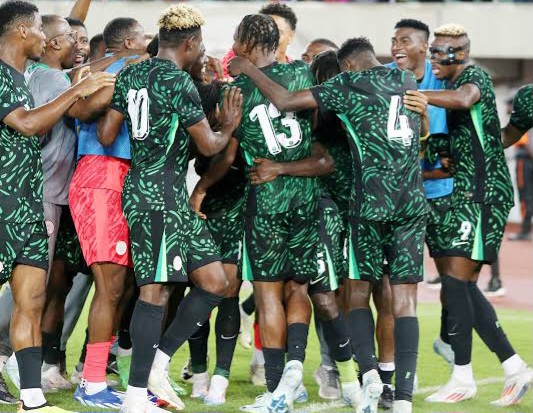
At the centre of the unfolding drama is incumbent NFF President, Ibrahim Gusau. Conventionally, incumbency provides significant advantages. Gusau has spent four years building relationships across the football landscape, interacting with FIFA, CAF, state football associations, clubs and other stakeholders. He remains a formidable figure within Nigerian football politics.
However, incumbency also attracts scrutiny. Critics will inevitably judge his administration against key performance indicators, particularly Nigeria’s inability to secure qualification for the FIFA World Cup. While football results are influenced by multiple factors, public perception often places ultimate responsibility on the leadership.
This reality explains why the election may become one of the most fiercely contested in recent history. Several influential football administrators are already being mentioned in political discussions, although many potential contenders are yet to publicly declare their intentions.
The battle is unlikely to be defined solely by personalities. Instead, competing visions for Nigerian football may emerge. One camp may argue for continuity, emphasising stability and gradual reforms. Another may push for comprehensive restructuring, citing World Cup failures and administrative shortcomings as evidence that fundamental change is required.
Beyond the presidency, stakeholders will also be paying close attention to the composition of the Executive Committee. Increasingly, governance experts argue that football development cannot be driven by a single individual. Strong institutions, transparent systems and competent committees are equally important.

The newly constituted Electoral Committee and Electoral Appeals Committee will therefore come under intense scrutiny. Their ability to conduct a credible, transparent and dispute-free election could determine public confidence in the outcome.
Perhaps the most interesting aspect of the emerging reform agenda is its potential impact on whoever emerges victorious in Lafia. Even if the statutes remain broadly aligned with FIFA and CAF requirements, stronger governance provisions could place future administrators under greater scrutiny.
This may include stricter accountability measures, enhanced financial transparency, clearer reporting obligations and more robust performance evaluation mechanisms. Such reforms would not necessarily weaken football leadership. Rather, they could strengthen institutions and ensure that football development becomes less dependent on personalities.
For many stakeholders, this is precisely what Nigerian football needs. The debate is no longer simply about who becomes NFF President. It is increasingly about building structures capable of producing sustainable success.
The ultimate challenge for the incoming leadership will be restoring confidence in Nigerian football. Beyond winning elections, the next administration must confront issues ranging from grassroots development and league growth to coaching education, infrastructure, youth football, women’s football and national team performance.
Most importantly, it must ensure that Nigeria never again finds itself watching the FIFA World Cup from home while nations with fewer resources and less football pedigree take centre stage.
As the countdown to September 26 continues, anticipation is growing. The lobbying has begun. Alliances are forming. Stakeholders are positioning themselves. Reform advocates are raising their voices. Incumbents are defending their records. Aspirants are weighing their options.
What happens in Lafia will not merely determine who occupies the Glass Offices of the NFF for the next four years. It could determine the direction of Nigerian football for the next decade.
For a football-loving nation still nursing the wounds of consecutive World Cup absences, the stakes have rarely been higher.