






*The quiet force powering the Games
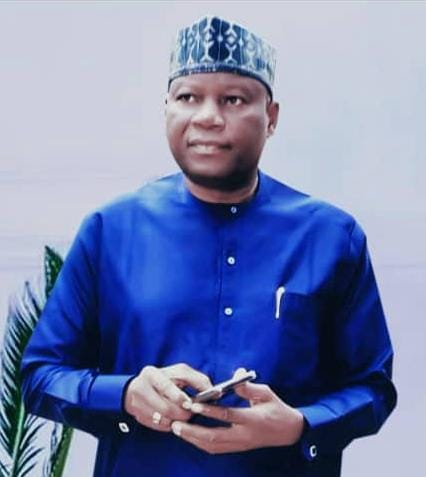
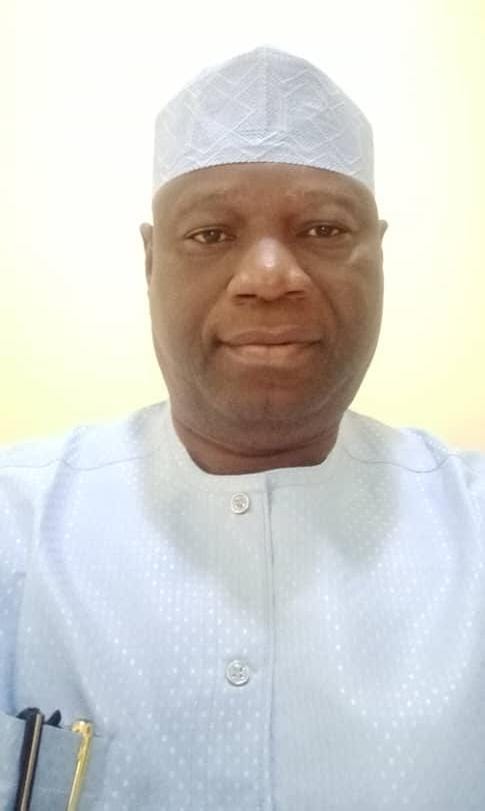
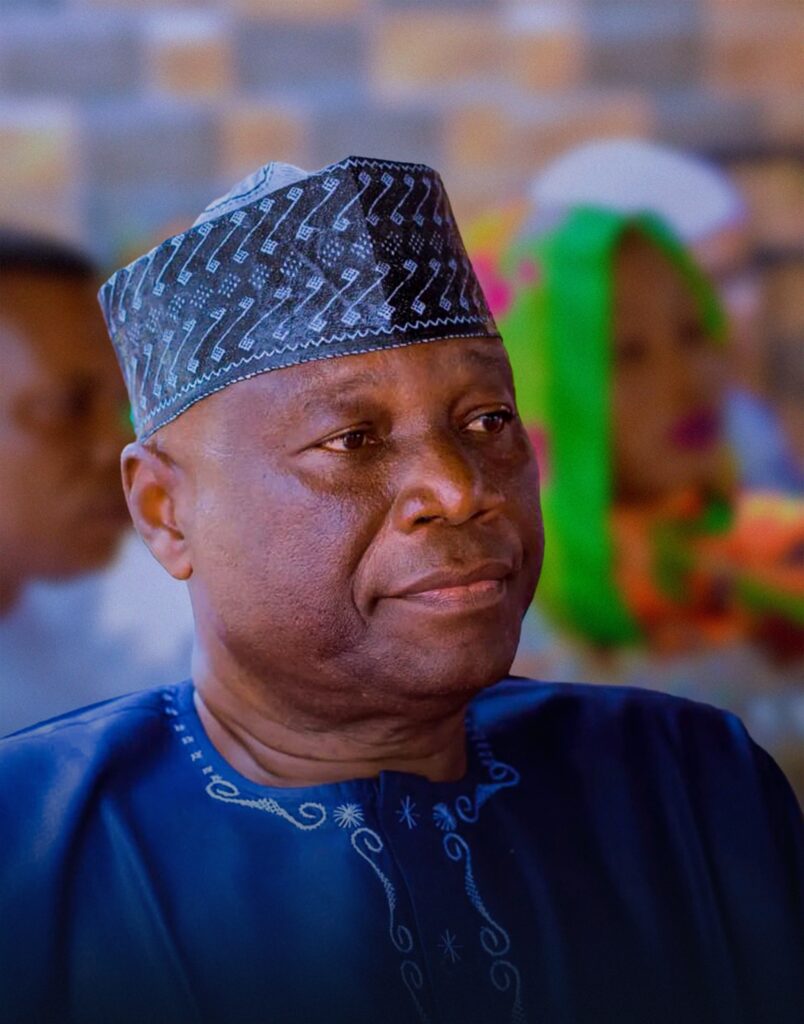
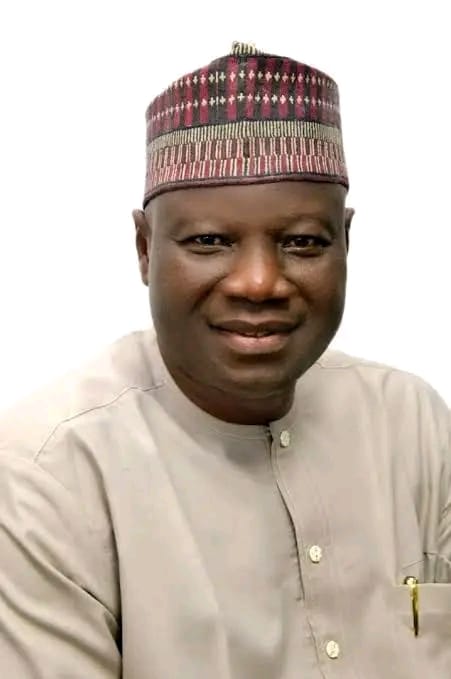
As Chairman of the Technical Committee of KWAFEST 2026, Coach Yinusa Tunde Kazeem has been at the heart of the technical planning, coordination and execution of the Games. His wealth of experience, attention to detail and understanding of sporting regulations have helped provide the framework within which athletes, coaches and officials can compete with confidence and fairness.
When the history of the 8th Kwara State Sports Festival is eventually written, much of the spotlight will understandably fall on the athletes who won medals, the officials who presided over the competitions, and the administrators whose vision and commitment brought the Games to fruition.
Yet, beyond the medals, records, colourful ceremonies and excitement on the competition venues lies an often-unseen engine that determines the credibility, efficiency and overall success of a multi-sport festival: its technical structure.
It is in this critical area that Coach Yinusa Tunde Kazeem is quietly distinguished himself.
While others occupy the foreground of the Festival, Kazeem has been working behind the scenes to ensure that the machinery of competition runs smoothly. His contribution may not always command the loudest applause, but it is one of the reasons the 8th KWAFEST is achieving the hitch-free and professionally organised character for which it is becoming known.
Behind the competitive excitement, colourful ceremonies and emerging talents is a critical technical machinery that determines whether a multi-sport festival succeeds or descends into confusion.
At the heart of that machinery is Coach Yinusa Tunde Kazeem, Chairman of the Technical Committee of the 8th Kwara State Sports Festival.
His appointment by the Kwara State Sports Commission was not accidental. It was a recognition of decades of experience acquired across virtually every layer of sports development, from athlete to coach, technical official and administrator, to Director of Sports and national sports stakeholder.
At KWAFEST 2026, that wealth of experience is becoming increasingly visible.
The relative smoothness of the Games, the coordination of events and the technical template guiding the different sports are products of deliberate planning, coordination and experience. Kazeem has brought to the assignment an understanding of what it takes to organise a multi-sports competition from the perspective of someone who has been on virtually every side of the sporting field.
Born in Ilorin on August 13, 1960, Kazeem’s sporting journey began long before he became an administrator.
As a young badminton player, he represented Kwara at the 3rd National Sports Festival in Kaduna in 1977. Two years later, he won a bronze medal at the 4th National Sports Festival in Oluyole ’79.
His competitive career continued to produce medals at state, national and institutional competitions, but perhaps more significant was the transition from athlete to coach.
On July 1, 1985, he joined the Kwara State Sports Council as a Coach/Player in badminton. That appointment marked the beginning of a public-service career that would eventually take him to the position of Director of Sports.
Along the way, he acquired extensive professional training, including International Badminton Federation coaching courses, National Institute for Sports training, Olympic-related courses and a Diploma from the International Olympic Academy in Athens, Greece.
That combination of practical experience and formal training would become a defining feature of his career.
Kazeem’s influence soon extended beyond badminton. As a coach, he led Kwara and Nigerian teams to several national and international competitions, producing impressive medal-winning performances. He coached teams at National Sports Festivals, African championships, Commonwealth competitions and Olympic qualifying events.
His international responsibilities also saw him serve as an African Badminton Federation instructor in countries including Ghana, South Africa, Egypt and Eritrea.
He was not simply producing athletes; he was also helping to produce systems, coaches and technical personnel. In 2010, Kazeem became Acting Director of Sports in Kwara State, a position he held until his confirmation as substantive Director of Sports in 2011.
His tenure became one of the most significant chapters in the history of sports administration in the state. He is widely regarded as the longest-serving Director of Sports in the history of the Kwara State Sports Council.
As Director, he led Team Kwara to National Sports Festivals, including the 2011 edition in Port Harcourt and the 2012 Eko Games in Lagos.
His responsibilities were no longer restricted to one sport. They encompassed the broader management of athletes, coaches, competitions, facilities, preparations and sports programmes. That experience is particularly relevant to his present assignment.
Kazeem’s administrative influence eventually reached the national level. In 2012, he was elected Chairman of the States Directors of Sports Forum in Nigeria, a position he held until 2020.
That role placed him among the senior administrators involved in discussions around sports development, athlete preparation and the management of state sports structures across the country. His national responsibilities continued through appointments and memberships of various technical and organising committees.
He served on the Technical and Development Commission of the Nigeria Olympic Committee, participated in the organisation of National Sports Festivals and National Youth Games, and was involved in several Federal Government delegations to major international competitions.
He was also part of Nigeria’s delegation to the 2018 FIFA World Cup in Russia and later served in other national and international assignments.
For Kazeem, therefore, technical administration is not a theoretical exercise. It is an area in which he has accumulated decades of practical experience.
It is this experience that the Kwara State Sports Commission has now placed at the service of the 8th Kwara State Sports Festival. As Chairman of the Technical Committee, Kazeem sits at one of the most important points of the Games’ organisational structure.
The success of a multi-sport festival is largely determined by what happens behind the scenes: scheduling, technical regulations, eligibility, officiating, venues, competition procedures, results, protests, coordination with associations and ensuring that each sport operates within an agreed framework.
These are areas where experience matters, and Kazeem’s contribution to KWAFEST has been about creating that structure and ensuring that it works. His technical template provides a common framework for managing the various sporting events while allowing each sport to retain its peculiarities.
The objective is simple but demanding: athletes should be allowed to compete under clearly defined conditions, officials should understand their responsibilities, results should be properly recorded and disputes should be handled through established procedures. That is the invisible work that makes a Games appear visible and effortless.
Kazeem’s philosophy of sports development has always extended beyond winning medals. Throughout his career, he has consistently emphasised grassroots development, talent identification and the preparation of young athletes for bigger stages.
His involvement in the National Youth Games is a reflection of that philosophy. He has repeatedly recognised youth competitions as platforms for discovering and nurturing the next generation of Nigerian athletes. That same philosophy is relevant to KWAFEST 2026.
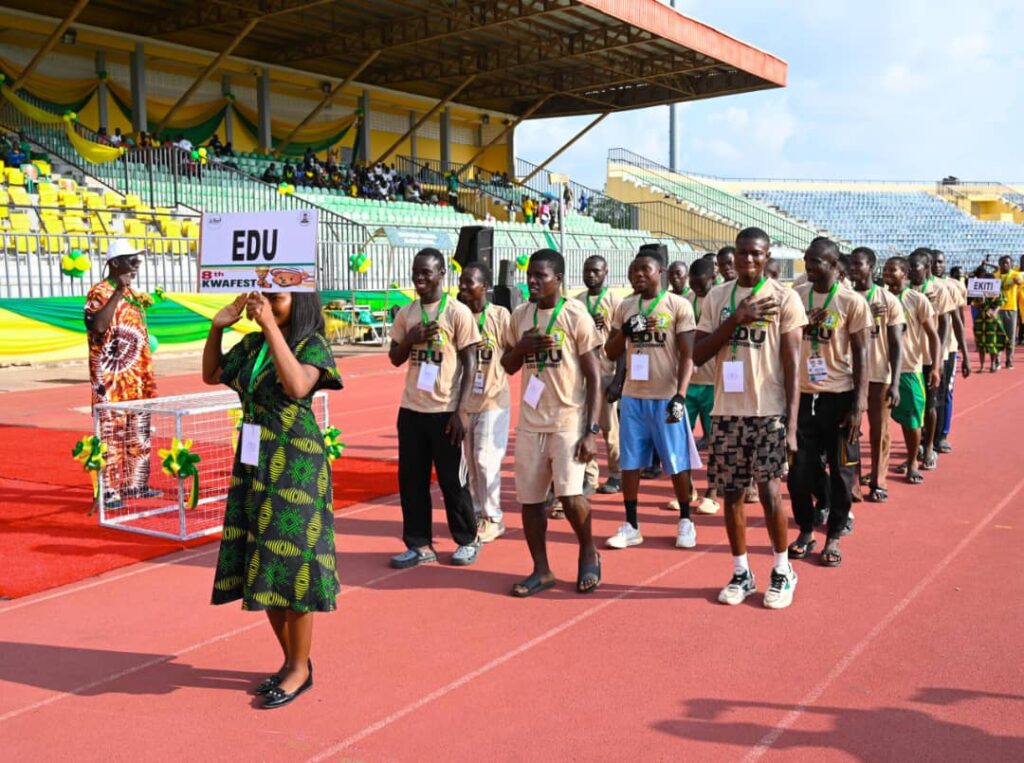
The athletes competing in Ilorin are not merely participants in a state festival. Some of them could become tomorrow’s National Sports Festival champions, national team players and international stars. For Kazeem, the responsibility is therefore, not merely to organise competitions but to ensure that the competitions provide credible platforms through which talent can be identified.
This explains why the technical integrity of the Games matters. A poorly organised competition can obscure talent. A properly structured one can expose it.
Although badminton remains central to his sporting identity, Kazeem’s career has long transcended the racket and shuttle. He has worked across different sports and administrative structures, served on organising committees, participated in football-related assignments and remained involved in para-sports and youth development.
In 2020, he established Kazolinks Sports Consult International, further extending his experience into private-sector sports development. He was also appointed Technical Director of the Badminton Federation of Nigeria, a position he has continued to occupy, with his reappointment recorded in 2026.
His involvement in sports has also earned him several recognitions, including awards for his contributions to sports development, badminton, youth sports and sports administration.
These honours are significant not simply because of the awards themselves, but because they reflect the breadth of his contribution to Nigerian sport.
Perhaps one of Kazeem’s greatest assets at KWAFEST 2026 is his ability to connect generations. He belongs to a generation that built its sporting identity through competition, discipline and institutional structures. Yet he has remained sufficiently involved to understand the expectations of today’s athletes and the changing demands of modern sports administration.
That makes his presence particularly valuable at a festival designed not only to determine champions but also to inspire the next generation. The young athletes see the medals. Kazeem sees the process that produces the medals. He understands that behind every champion is a system, coaches, officials, administrators, facilities, rules, competitions and opportunities. And that is why his role at KWAFEST goes beyond chairing meetings or signing technical documents.
The success of a sports festival is rarely attributable to one individual. It is the product of collective effort. But within that collective effort, some roles are more visible while others operate quietly behind the scenes. Coach Yinusa Tunde Kazeem belongs to the latter category.
While athletes receive the applause and organisers take the spotlight, the veteran administrator has been working largely through systems, procedures and coordination to ensure that the competitions remain on course. His contribution may not always be measured in medals, but it is reflected in the smooth running of the events.
For someone whose sporting journey began as a young badminton athlete at the 1977 National Sports Festival, his presence at the 8th Kwara State Sports Festival almost five decades later represents a remarkable full circle. From athlete to coach. From coach to administrator. From Director of Sports to national sports leader.
And now, at KWAFEST 2026, as Chairman of the Technical Committee, Kazeem is once again contributing his experience to the development of the next generation. His story is therefore not merely that of a veteran who has remained relevant.
It is the story of a sports technocrat whose greatest legacy may ultimately be the systems, athletes, coaches and administrators he has helped to build. At the 8th Kwara State Sports Festival, that legacy is alive, working quietly, methodically and effectively behind the scenes to give the Games the technical foundation required for a successful and memorable festival.