







For years, Kwara United Football Club lived on the edge, oscillating between flashes of brilliance and seasons of uncertainty, often undermined by the instability that plagued its administration.
In a league where boards change as often as jerseys, Kwara United’s history, easily moving from the elite and lower league owing to frequent call for, and change in management of the club, denied it of reliable stability.
But today, the narrative around the Harmony Boys has changed. Behind that quiet transformation stands one man whose administrative foresight and policy-driven approach have given the club a stable foundation. He is Prince Oladimeji Ladi Thompson.
Prince Oladimeji’s impact began to take shape long before the current atmosphere of calm. As a key advocate of the Kwara United Management Bill, he pushed for a legal framework that would protect the club from the turbulence that often comes with political transitions.
The bill, eventually signed into law by former Governor AbdulFatah Ahmed, remains one of the most important turning points in the club’s modern history.
When the Kwara State House of Assembly passed the Kwara United Football Management Bill under former Governor AbdulFatah Ahmed, few could have predicted how profoundly it would reshape the future of the Harmony Boys. Years later, the law stands as the silent engine of the club’s growing administrative stability, a foundation that has allowed Kwara United to plan, grow, and compete with a consistency that was once elusive.
At the Centre of that shift is Prince Oladimeji Ladi Thompson, a businessman-turned-club-boss whose stewardship, critics and fans agree, has catalytic in professionalizing operations, deepening ties with government channels, and helping secure larger, more predictable funding for the club.
The law guarantees: a straight four-year tenure for the club’s management, a renewable term based on performance, a structure that insulates the club from frequent leadership changes and clear operational guidelines and accountability mechanisms.
This was the kind of structural stability that Nigerian football clubs rarely enjoy. For Kwara United, it meant for the first time, a long-term plan could survive beyond one season or one political cycle.
If the management bill laid the foundation, Prince Oladimeji Ladi Thompson’s work did not stop there. He remained instrumental in ensuring that Kwara United received improved government subvention, a crucial step in easing the chronic financial strain that had slowed the club’s ambitions in the past.
The increased funding allowed the club to attract and retain better players, improve welfare and logistics, strengthen technical staff capacity and to compete more confidently in the Nigeria Premier Football League, and equally expand its youth development efforts.
For a team that had once struggled with basic operational needs, the change was transformative.
Nigerian football is no stranger to administrative drama. Club boards are dissolved and reconstituted at will, funding fluctuates, and long-term strategies are often abandoned before they mature. Yet, Kwara United, thanks to the stability championed by Prince Thompson, has managed to stay above the fray.

Club insiders often describe him as a strategic thinker, someone who understands the delicate relationship between policy, funding, and football performance. His influence is felt not through loud declarations, but through an unmistakable shift in how the club now operates.
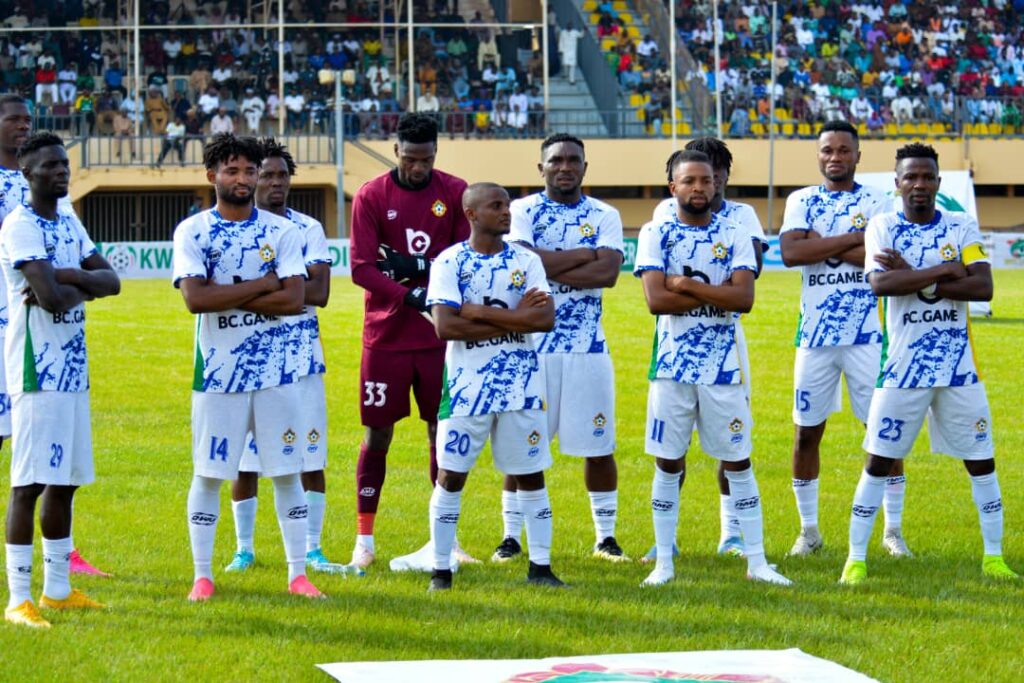
Today, Kwara United is gradually emerging as a model of administrative order in Nigerian football. Coaches work with clearer expectations, players enjoy better conditions, and management has the breathing space needed to plan beyond immediate survival.
More importantly, fans now see a club whose leadership structure is predictable, stable, and anchored on law, not whims.
Prince Oladimeji Ladi Thompson’s role in Kwara United’s resurgence is proof that football success is not only built on the field. Sometimes, it starts with a pen stroke on a bill and the courage to push for reforms that may not be glamorous but are foundational.
Prince Oladimeji Ladi Thompson, the Kwara Pillar of Sports first entered the public spotlight as Kwara United’s Chairman more than half a decade ago, bringing the private-sector discipline of his business life into the football boardroom. Where previous administrations were often described as reactive, Oladimeji’s approach had emphasized planning: clearer budgets, designated officers for media and logistics, and a renewed focus on youth recruitment and community engagement.
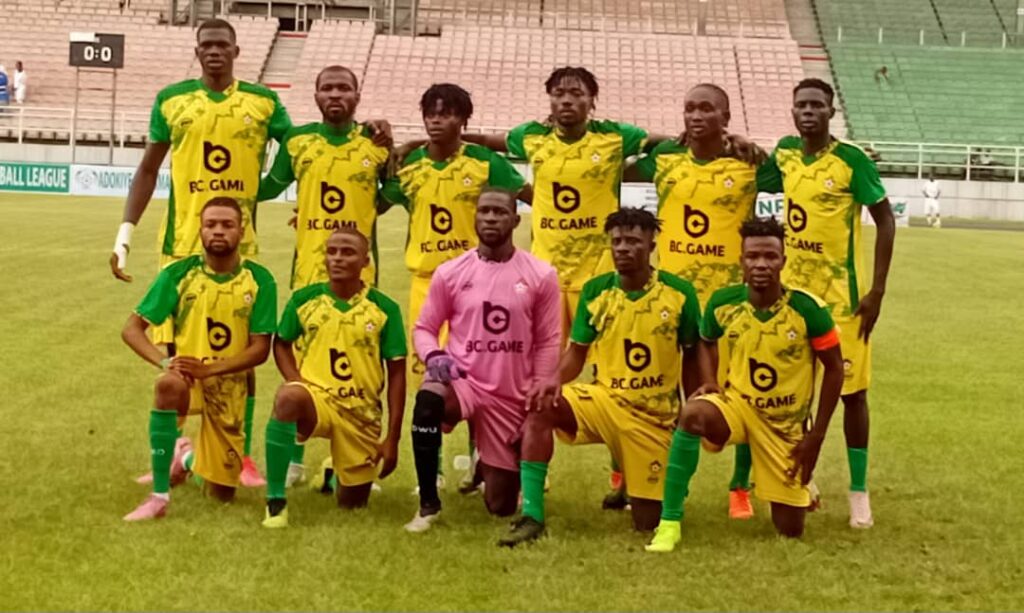
Those structural moves, hiring competent administrators, pushing simple but powerful internal controls, and insisting on regular stakeholder meetings, reduced the small daily fires that once distracted the club from long-term work.
He served as Chairman of Kwara United in two different terms.
Another very fundamental factor was the fact that the foundation was being perfectly built on by the current management being led by Titiloye Clement Olakumbi. Also, all these are being complemented by a purposeful leadership of the State FA under the leadership of Alhaji Idris Abdullahi Musa, popularly known as Thuraya.
Under Titiloye, the club has continued to break records, as well as breaking new grounds.
Altogether, many thanks should go to the Governor, Mallam AbdulRahman AbdulRazaq, whose investment and interventions in sports, especially Kwara United, has kept the fire burning.
As the club continues its journey, one thing is certain: the stability it enjoys today did not happen by accident. It is the product of deliberate design, and at the center of that design is a man who believes that football administration must be structured, sustainable, and shielded from chaos.

Kwara United’s future looks brighter. And in that brightness, the imprint of Prince Oladimeji Ladi Thompson remains unmistakable.
*Don’t get it twisted — my name is Jimoh Ayinla Bashir, tagged as Kwara United defender, and FA protector.