


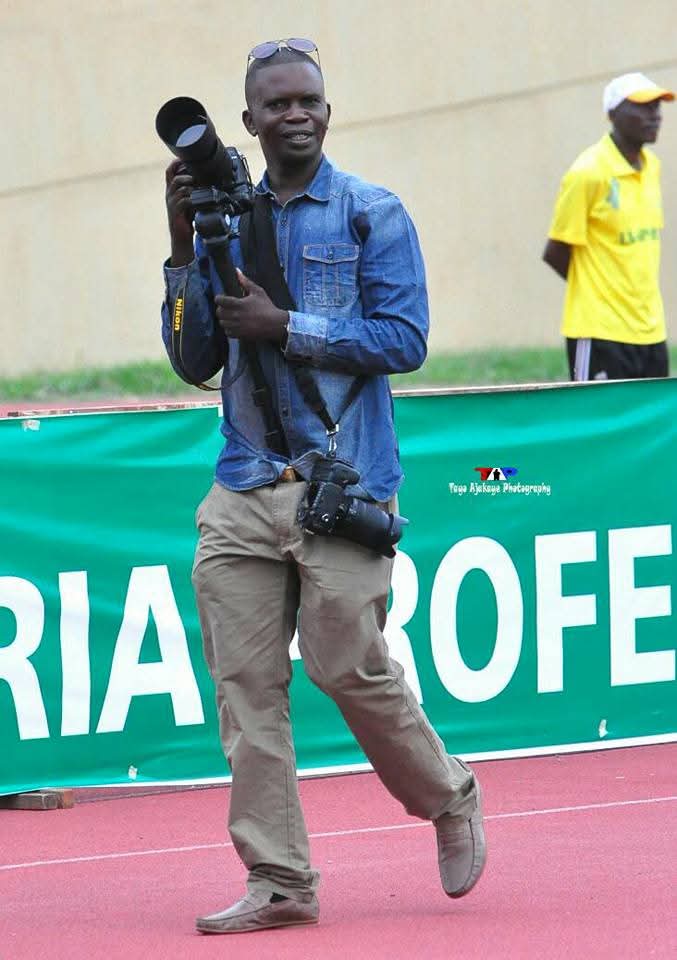
*A story of resilience, opportunity and destiny
Success often arrives disguised as hardship. For FIFA-accredited photojournalist Abdul Momoh, the path to international recognition was neither straightforward nor predictable. It was a journey marked by chance encounters, difficult decisions, personal setbacks, and an unwavering determination to rise above circumstances.
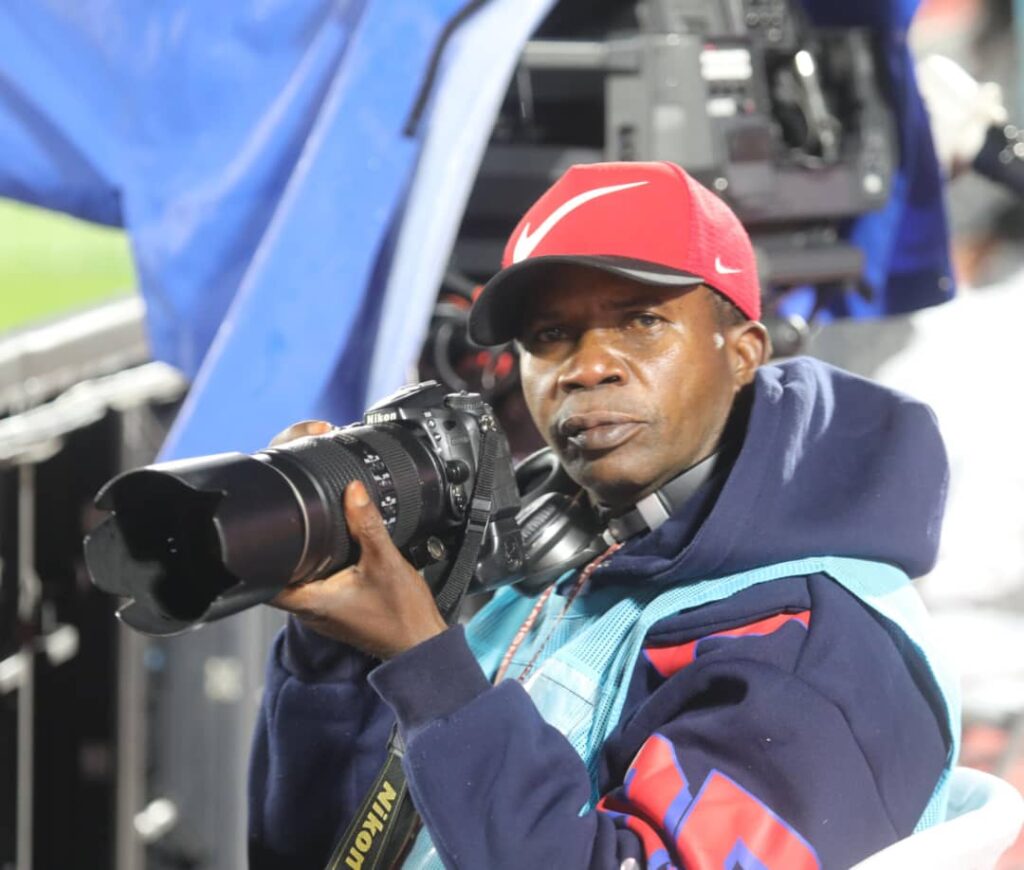
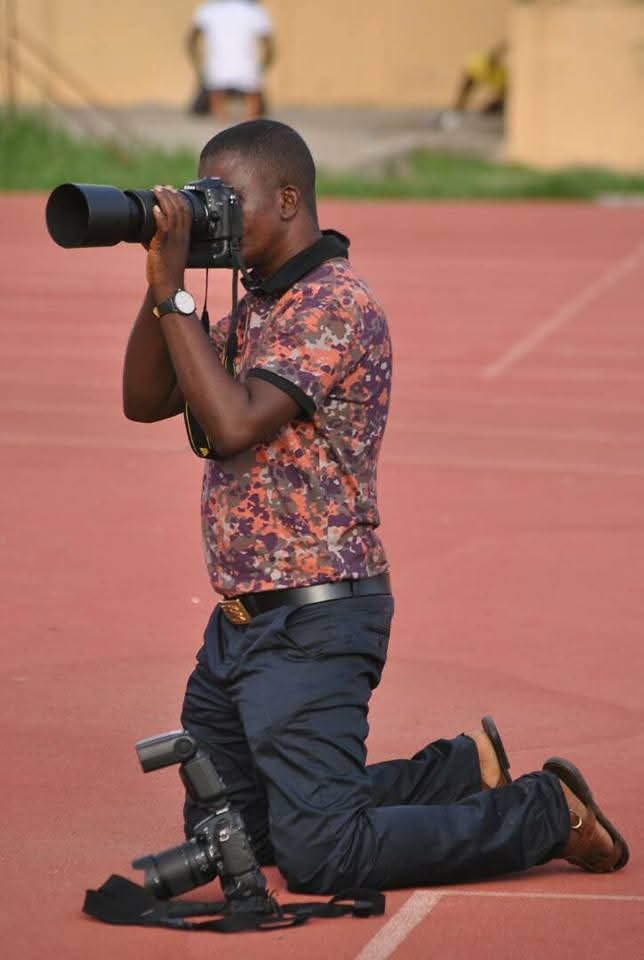
Today, Abdul Momoh is a respected figure in sports photojournalism, having covered numerous international tournaments and built a reputation for excellence. Yet, his story began far away from the glamour of global sporting events.
Fresh out of secondary school and uncertain about the future, Abdul found himself spending his days around Ilorin. It was during this period that fate introduced him to a travelling herbal medicine trader who had come to the city for a trade fair.
A theft incident involving one of the trader’s assistants brought them together. Abdul witnessed the incident and helped the herbalist relocate to another hotel. Impressed by his honesty and maturity, the trader quickly developed immense trust in him and even invited him to accompany him to Edo State.
At the same time, the Manager of FemKem Hotel on Police Road, GRA Ilorin, Mr. Gbenga, had been observing the young man’s diligence and character. Struggling with a leg ailment, he sought Abdul’s assistance in obtaining herbal treatment from the trader.
The successful arrangement strengthened Abdul’s relationship with both men and eventually led to an unexpected opportunity.
Rather than leave Ilorin, Abdul accepted an offer to work at FemKem Hotel as an assistant. His ability to multitask and attend to customers efficiently soon distinguished him from his peers.
He was assigned to manage the bar section and quickly became one of the most popular staff members at the establishment. Over time, he rose through the ranks and became a supervisor.
The hotel served as a meeting point for many influential personalities in Ilorin. Among his regular customers were individuals who would later become prominent figures in society, including the current Chairman of Kwara United Football Club, Kumbi Titiloye.
One incident during his hotel days would leave a lasting lesson on customer relations. A group led by Titiloye had accumulated a substantial bill and left without settling it, provoking the anger of the hotel management.
Rather than panic, Abdul patiently waited for an opportunity to meet him. When he eventually explained the situation, Titiloye immediately settled the debt.
The experience reinforced a principle that Abdul still lives by today. “Every customer is unique and deserves patience and respect.”
Among the hotel’s distinguished patrons was Babs Omotowa, a former teacher at Bishop Smith Memorial College who later became a top executive in Shell Petroleum Development Company.
Inspired by stories of opportunities in the oil sector, Abdul decided to seek a better future in Warri. Arriving at Shell’s operational areas in the Niger Delta was like entering another world.
“The place was called Small London,” he recalls. “It was full of opportunities.”
Though he initially struggled to secure employment, persistence eventually paid off when he was employed by CNPC, a Chinese subsidiary working with Shell.
His duties involved participating in exploration activities in the creeks, helping locate crude oil deposits. The work was physically demanding and often dangerous, requiring personnel to undergo rigorous safety training covering fire management, water safety and industrial operations.
Whenever successful discoveries were made, employees received bonuses in addition to attractive salaries.
While working with the Chinese team, Abdul became fascinated by the cameras carried by visiting photographers.
Unlike many professionals he would later encounter, these Chinese photographers impressed him not only with their technical skills but also with their humility, discipline and professionalism.
Their willingness to trust him with their equipment became the turning point of his life.
They taught him the fundamentals of photography, allowed him to practice with their cameras and gradually nurtured his interest in visual storytelling. What began as curiosity soon evolved into passion.
When the Chinese photographers eventually departed, colleagues began inviting Abdul to document company activities and events. Without realizing it, he had taken the first steps toward a new career.
Despite enjoying financial stability in the oil industry, Abdul continued to seek advancement.
He hoped to secure a position directly with Shell and once again sought assistance from Babs Omotowa. Unfortunately, he discovered that Omotowa had relocated to the United Kingdom. The disappointment was immense.
Soon afterwards, personal challenges emerged. A relationship led to an unexpected pregnancy, creating tension with the lady’s community and eventually affecting his work situation.
A company transfer followed, and later severe flooding disrupted operations, leading to the disengagement of several employees, including Abdul.
Although compensated financially, he suddenly found himself at another crossroads.
He ventured into transportation, video rental and barbing salon businesses in Abraka. While some of these ventures enjoyed modest success, personal and family challenges limited their growth.
An attempt to join the Nigeria Police Force also ended painfully after he fell victim to a fraudulent recruitment scheme, losing substantial sums of money and several valuable possessions.
At one of the lowest points in his life, Abdul received life-changing advice from his mother. She encouraged him to return to photography.
His mother introduced him to a female photographer who became both mentor and supporter, providing encouragement and occasional financial assistance.
Her guidance reflected a deeper concern. Having watched her husband serve as a distinguished police officer whose lifestyle of excessive drinking, smoking and gambling eventually affected his health, she preferred a different path for her son.
Abdul listened.
That decision would prove transformative.
Back in Ilorin, Abdul embraced photography wholeheartedly.
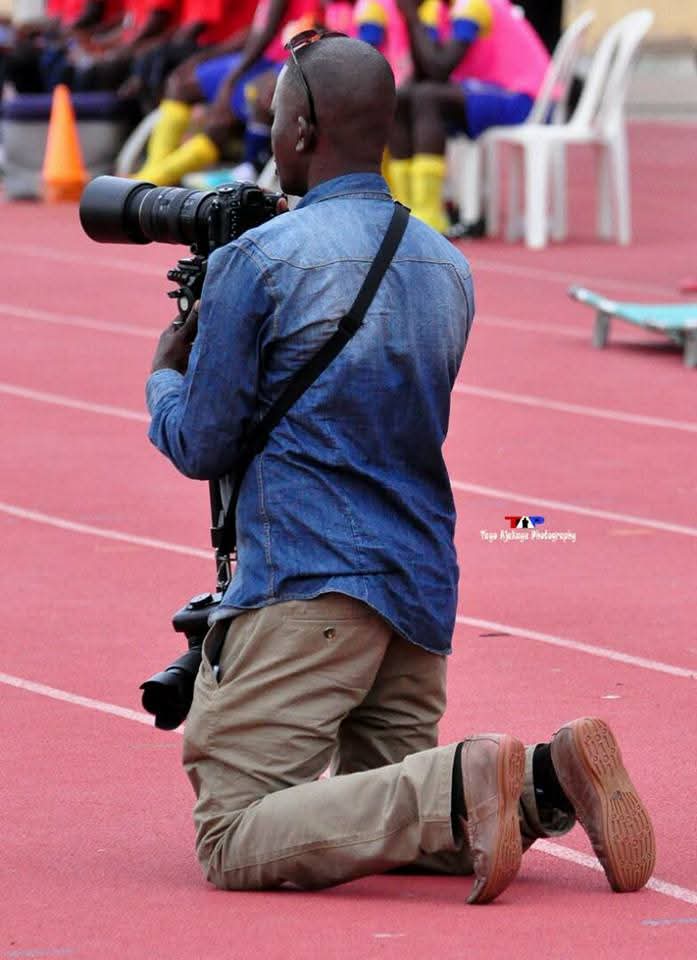
His earliest assignments came around the swimming pool area of the George Agbazika Innih Stadium Complex, where he combined his love for swimming with taking photographs.
A chance request from a man celebrating his birthday resulted in his first paid photography job. From there, he began covering inter-house sports competitions across schools.
It was during one of these events that he encountered the man who would become the single most influential figure in his professional development. A veteran sports journalist Bayour Issah.
Bayour Issah immediately recognized Abdul’s potential. Initially purchasing some of his photographs, he later invited the young photographer to his office. Abdul was captivated.
The office was filled with books, televisions and information resources. More importantly, it was filled with opportunities.
Bayour introduced him to the world of journalism, connected him with major sporting events and provided invaluable mentorship. Beyond photography, he taught discipline, financial management and professionalism.
According to Abdul, “He completely transformed my life.”
Under Bayour Issah’s guidance, Abdul evolved from a street photographer into a respected photojournalist.
His first major assignment outside Ilorin was the opening ceremony of the National Stadium in Abuja, featuring Nigeria and Brazil. Despite working with equipment inferior to that of many colleagues, Abdul’s determination and work ethic stood out.
He later covered the COJA Games and numerous national competitions. Through Bayour Issah, Mr. Sports and other mentors, Abdul gained access to major sporting assignments across Nigeria.
His involvement with YSFON further expanded his horizons, taking him to virtually every region of the country.
Photojournalism was not without risks. One unforgettable experience occurred during a journey to Kano for a World Cup qualifier between Nigeria and Angola.
Travelling overnight through Kaduna, Abdul and his colleagues encountered armed robbers who had mounted a roadblock. Their driver refused to stop, narrowly avoiding what could have been a tragic incident.
Such moments underscored the hazards often faced by journalists in pursuit of their work.
Perhaps one of the most pivotal moments of Abdul’s career occurred during the Africa Cup of Nations in Ghana in 2008. At Kotoka International Airport, he joined fellow journalists waiting to receive then Kwara State Governor, Senator Abubakar Bukola Saraki.
Before the Governor arrived, an aircraft carrying telecommunications magnate Mike Adenuga landed. The journalists introduced themselves. In an extraordinary gesture, Adenuga rewarded them generously.
The unexpected windfall enabled Abdul to purchase a professional-grade camera, an investment that significantly elevated the quality of his work and accelerated his career growth.
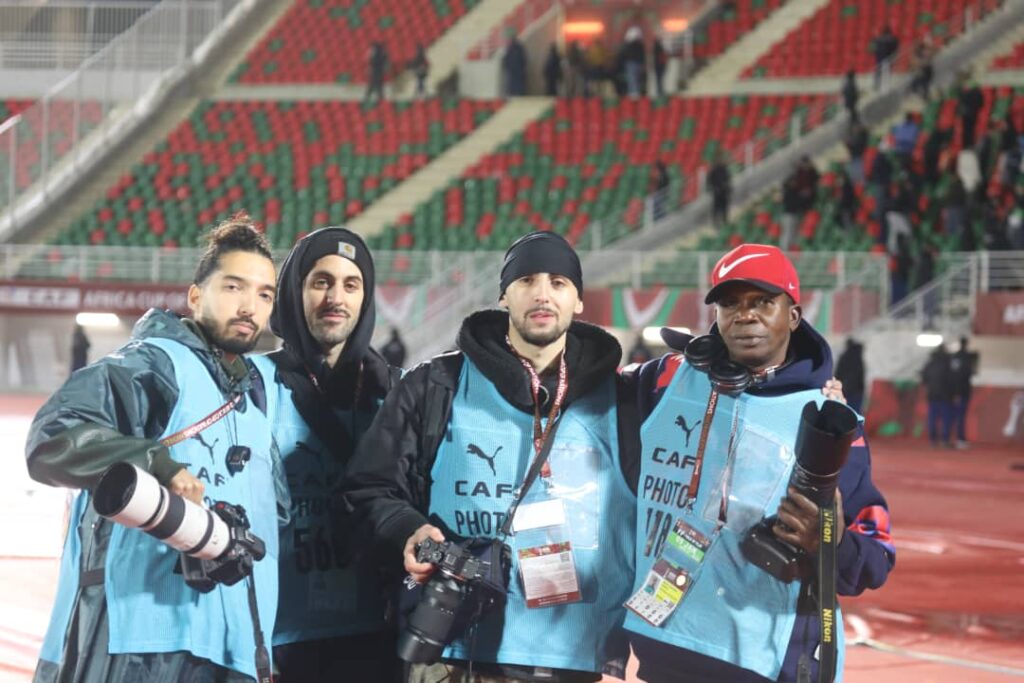
Over the years, Abdul covered numerous international tournaments and earned accreditation at FIFA events. His assignments took him across continents and introduced him to some of the biggest names in world football, including Taiwo Awoniyi, Kelechi Iheanacho and Isaac Success.
He became known for his willingness to venture into difficult environments and produce compelling images.
His photographs appeared in newspapers, magazines and sports publications, earning widespread recognition. Remarkably, he says photography has provided consistent livelihood throughout his professional life.
Among all the people who shaped his journey, Abdul reserves special appreciation for Bayour Issah.
He describes the veteran journalist as an institution whose contributions to sports development and media mentorship in Kwara State deserve official recognition.
According to him, countless careers, including his own, owe their success to Bayour’s generosity, wisdom and commitment to developing young talents.
After years of travelling and dedicating his life to journalism, Abdul eventually decided it was time to build a family. He married the love of his life from the Oloje area of Ilorin, and together they have built a peaceful home.
Looking back on his remarkable journey, from hotel attendant and oil field worker to internationally recognised photojournalist, he remains grateful to God for every experience, every lesson and every opportunity.
His story stands as a powerful reminder that greatness often emerges from the most unexpected beginnings.
And for Abdul Momoh, a camera became far more than a tool; it became the instrument through which destiny revealed itself.