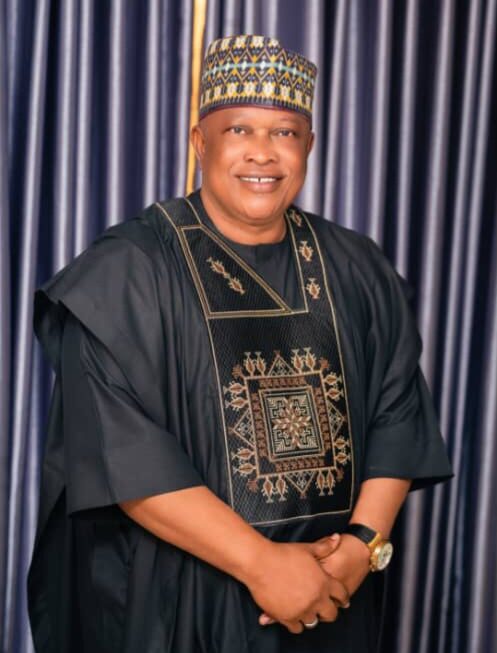










*How a Lagos schoolboy became Nigeria’s first FIFA World champion
In the rich history of Nigerian football, few stories capture the imagination quite like that of Fatai Atere, a young boy from the bustling streets of Mushin, Lagos, who rose from school football prominence to become one of the country’s most celebrated youth football heroes.
Long before millions of Nigerians followed the exploits of the Golden Eaglets on television, Atere had already written his name into football folklore. His journey from the Principal’s Cup to the FIFA World Cup remains one of the most inspiring tales in Nigerian sports history.
In 1985, while still a student of the prestigious Igbobi College, Yaba, Atere captained his school team to a historic triumph in the Lagos State Principal’s Cup.
The victory was particularly significant because it ended a 38-year wait for the famous trophy. For many students, winning the Principal’s Cup would have represented the pinnacle of their football careers. For Atere, however, it was merely the beginning.
Later that same year, fate beckoned on a much bigger stage. FIFA was preparing to stage the inaugural FIFA U-16 World Championship in Beijing, China, and Nigeria’s Golden Eaglets were among the participating nations.
At just 14 years old, Atere earned a place in the squad, becoming the youngest member of a team that would eventually change the narrative of African football forever.
Many football experts doubted the chances of the Nigerian youngsters. The competition featured football powerhouses from Europe, South America and Asia. Yet the Golden Eaglets arrived in China with confidence, determination and a desire to prove themselves.

Atere’s defining moment came during the tense semi-final encounter against Guinea. With the match delicately poised and Nigeria fighting for a place in the final, the young midfielder displayed remarkable composure beyond his age. His crucial goal kept Nigeria’s hopes alive and paved the way for victory through penalties.
That victory set up a historic final against West Germany. On August 11, 1985, the Nigerian youngsters stunned the football world with a commanding 2-0 victory. The result earned Nigeria its first-ever FIFA title and delivered Africa’s maiden FIFA World Cup trophy.
Reflecting on that unforgettable achievement years later, Atere described the impact of the triumph in simple but profound words: “China ’85 changed our whole lives.”
The celebrations that followed were unprecedented. Across Nigeria, jubilant fans poured into the streets. The victorious players became national heroes overnight. In Lagos, roads were named after members of the victorious squad.
One such road, “Fatai Atere Way” in the Matori area of Lagos, still bears testimony to the remarkable achievements of the teenage footballer. Although each player received a reward of N5,000 from the government, Atere often says the honour and recognition were worth far more than any monetary reward.

If the success in China established him as a football prodigy, his performances two years later in Canada confirmed his status as a national icon. At the FIFA U-16 World Championship in Canada in 1987, Atere returned as captain of the Golden Eaglets.
Alongside teammate Tonworimi Duere, he was one of only two players retained from the victorious China squad. Under his leadership, Nigeria once again reached the final, becoming the first African nation to achieve such consistency at youth World Cup level.
Although the Soviet Union eventually denied Nigeria a second consecutive title after a dramatic penalty shootout, Atere had already etched his name into history. Before his 18th birthday, he had played in two FIFA World Cup finals and captained his country on the global stage — a feat few footballers anywhere in the world could boast of.
His performances naturally attracted attention from Europe. English club Tottenham Hotspur invited him for trials, and by all accounts, he impressed. A professional contract appeared certain. However, administrative bottlenecks and football bureaucracy at home intervened.
At the time, Nigerian football authorities exercised strict control over players’ movements abroad. Tottenham reportedly declined to meet the financial conditions imposed, and the transfer collapsed. What could have been a groundbreaking move to one of England’s biggest clubs never materialised.
Undeterred, Atere continued his football journey. He featured for the Junior Eagles in the ECOWAS Tournament and later played for notable Nigerian clubs, including IBWA FC and Bank of the North FC. His football experience subsequently took him abroad, where he combined further education with coaching development.
In recognition of his contributions to Nigerian football and national development, the Federal Government honoured him with the prestigious Member of the Order of the Niger (MON).
Beyond the national honour, he has received numerous awards and recognitions from sports organisations, educational institutions and football stakeholders who continue to celebrate his pioneering achievements.
Today, Atere resides in the United States of America and holds citizenship of two countries. Despite his global exposure, his passion for Nigerian football remains undiminished. Speaking during a telephone interview with Sportspro News Publisher, Bayour Issah, the former Golden Eaglets captain expressed disappointment at Nigeria’s absence from the ongoing FIFA World Cup.
Describing the tournament, Atere remarked that watching the competition without Nigeria was like “tea without sugar,” a vivid reflection of the country’s deep football culture and significance on the world stage.
The football legacy within the Atere family continues through his son, Leye Atere, who is actively involved in coaching in Osun State. The younger Atere hopes to build upon his father’s achievements and carve out an even greater legacy in the game.
Looking back, the story of Fatai Atere remains extraordinary. He ended Igbobi College’s 38-year wait for the Principal’s Cup and helped end Africa’s wait for a FIFA title, all before reaching his fifteenth birthday.
From the dusty school football pitches of Lagos to the grand stadiums of Beijing and Canada, Atere’s journey embodies the power of talent, discipline, determination and opportunity.
His story serves as a timeless reminder that greatness can emerge from humble beginnings and that dreams nurtured on school fields can ultimately conquer the world.