





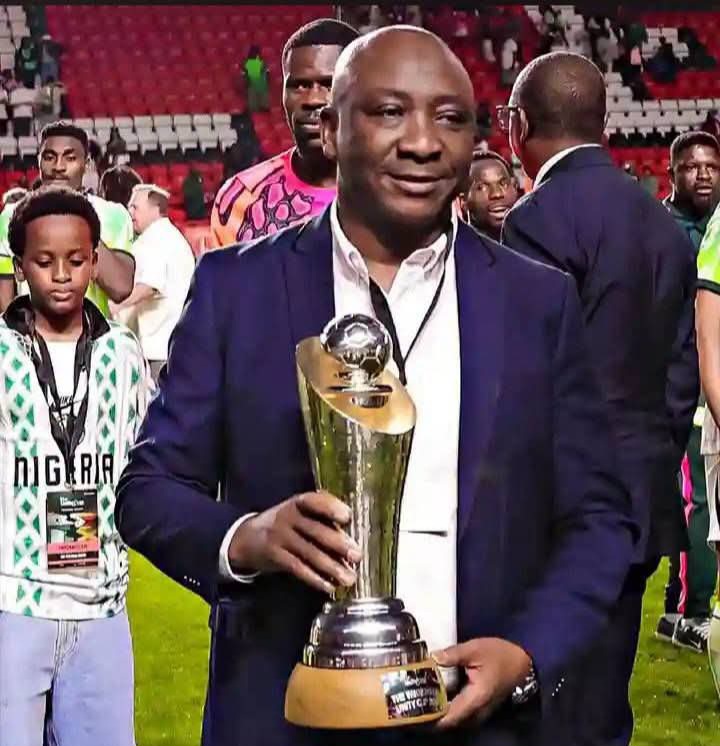
The Nigeria Football Federation (NFF) enters the final stretch towards its 2026 Elective Congress in Lafia, Nasarawa State, under an unusually intense atmosphere.
The September 27 election is already generating the familiar ingredients that have historically surrounded NFF elections: political manoeuvring, competing interests, accusations, counter-accusations, lobbying, mudslinging and, inevitably, attempts to rewrite the narrative around the achievements and failures of the outgoing administration.
This time, however, the pressure is being amplified by a series of disappointing results from Nigeria’s national teams.
The Super Eagles’ failure to qualify for the 2026 FIFA World Cup remains a painful scar. The Flying Eagles’ recent setback in the WAFU B U-20 Championship has further fuelled public frustration, while the Super Falcons’ failure to successfully defend their Women’s Africa Cup of Nations title and subsequently secure a place in the 2027 FIFA Women’s World Cup has intensified the demand for accountability.
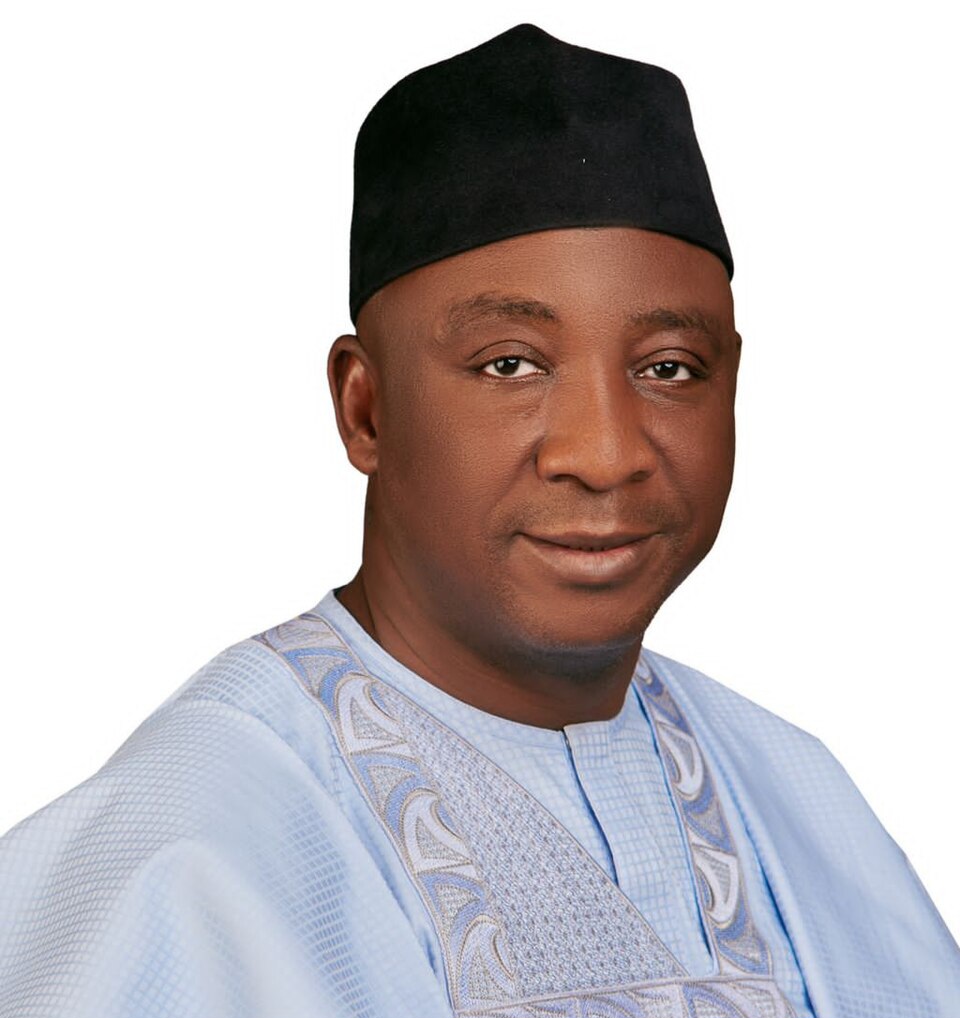
The disappointment is legitimate. Nigerians have every right to demand better results from their national teams. But in assessing Alhaji Ibrahim Musa Gusau-led NFF, there is a need to flip the other side of the coin.
Because, while failures must be interrogated, achievements must not be deliberately erased simply because an election is approaching. And perhaps more importantly, responsibility must be properly assigned.
The easiest thing in Nigerian football today is to blame the NFF for virtually everything that goes wrong.
It is the most visible football institution. It selects coaches, administers national teams, organises competitions and represents the country internationally. Consequently, whenever a national team fails, the NFF becomes the natural target. But Nigerian football is a much larger ecosystem.
The NFF does not operate in isolation. There is the National Sports Commission (NSC), the Federal Government, the technical departments, coaches, players, state football associations, clubs, sponsors and several other stakeholders whose decisions collectively determine the fortunes of Nigerian football. That distinction is particularly important when issues of funding, motivation, logistics and government financial commitments arise.
The NFF can prepare budgets, make requests, organise teams and submit financial proposals, but the release of government funds is ultimately subject to the wider government financial architecture. This is where the public conversation needs greater precision.
If players are owed government-approved rewards, bonuses or other federal commitments, Nigerians should ask the uncomfortable but necessary question: which institution controls the money?
Accountability should never become a political weapon used to punish one institution for the responsibilities of another. The Super Falcons’ situation provides a clear example. Following their historic 2025 WAFCON triumph, promises were made to the players and technical crew. Yet, as the team prepared for the 2026 championship, concerns remained about the fulfilment of some of those commitments.
When such promises remain outstanding, it is unfair to automatically transfer the entire responsibility to the NFF.
Indeed, if motivation is an important ingredient in elite sports, then delayed government rewards are themselves a factor that deserves serious scrutiny.
The NSC was created, among other objectives, to modernise and simplify sports administration and reduce the bureaucratic difficulties associated with sports funding. It therefore, cannot escape scrutiny whenever funding, motivation and government support for national teams become issues.
There is another matter that deserves attention as the election approaches, which is the growing debate over the relationship between the NSC and the NFF.
Government support for sports is welcome and necessary. Government interference in the administration of football is an entirely different matter.
Football administration is governed by its own statutes and international regulations. FIFA’s framework places the administration of football in the hands of recognised member associations and their congresses.
Nigeria has experienced the consequences of administrative interference before.
Whenever football governance becomes a battleground between political authority and football structures, the result can be devastating: uncertainty, litigation, parallel structures, sanctions and, in the worst-case scenario, international suspension. Nigeria cannot afford another cycle of self-inflicted football crisis.
The NSC’s responsibility should be to create the environment in which sports can flourish, provide infrastructure, facilitate funding, develop facilities, support athletes and create policies that strengthen sports. The NFF, meanwhile, should be allowed to administer football within the framework of its statutes and FIFA regulations, and not NSC employing an overriding attitude and engagement.
If there are concerns about the NFF, the answer should be stronger institutional oversight through the NFF Congress, transparent processes and constructive engagement, not the replacement of football governance with political intervention.
The 2022 NFF election that produced the Gusau-led board was conducted through the established electoral process and observed by FIFA, with former Switzerland international Gelson Fernandes representing the world football governing body. That fact should not be forgotten as the next election approaches.
Nigeria needs continuity of institutions, not a return to the era when football administration was repeatedly destabilised by political contests.
Critics of Ibrahim Musa Gusau have every right to demand more from his administration. But they cannot reasonably demand that his achievements be erased from the record.
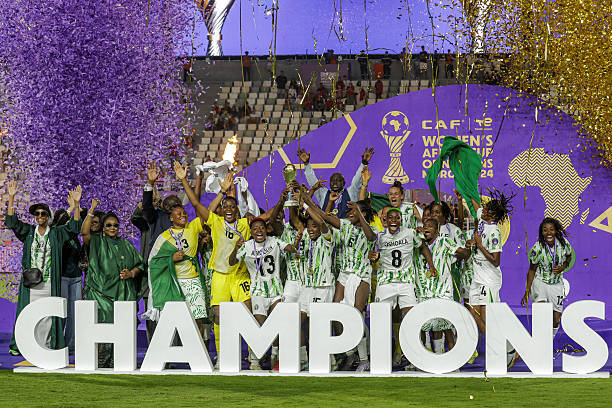
Since the Gusau-led board assumed office, Nigerian football has continued to produce significant continental and global achievements. The Super Falcons won the 2025 WAFCON, securing Nigeria’s record-extending 10th continental title.
That victory was particularly remarkable because Nigeria recovered from two goals down to defeat hosts Morocco 3–2 in a dramatic final. The Super Falcons also reached the Round of 16 at the 2023 FIFA Women’s World Cup and returned to the Olympic Games at Paris 2024 after a 16-year absence.
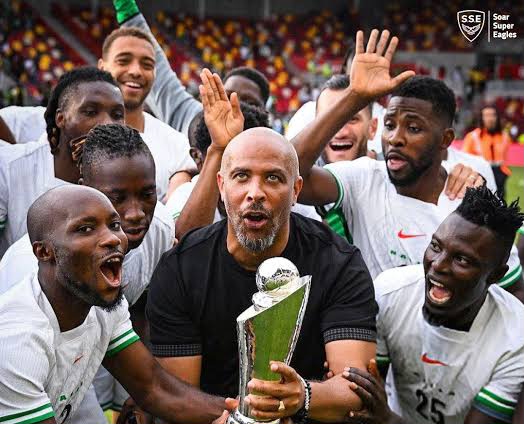
The Super Eagles reached the 2023 AFCON final and subsequently won the bronze medal at the 2025 AFCON.
At youth level, the Flying Eagles won the WAFU B U-20 Championship in 2022 and successfully defended the regional title in 2024.
Nigeria also qualified for the 2023 FIFA U-20 World Cup, where the Flying Eagles defeated hosts Argentina before reaching the quarter-finals.
The team qualified again for the 2025 FIFA U-20 World Cup after finishing among the leading teams at the 2025 U-20 AFCON, subsequently reaching the Round of 16 in Chile.
The Falconets have maintained Nigeria’s presence at the FIFA U-20 Women’s World Cup, while the Flamingos won bronze at the 2022 FIFA U-17 Women’s World Cup and reached the quarter-finals of the 2024 edition.
These are not political slogans. They are tournament records. They are results. They are evidence that the national-team structure has not collapsed under the Gusau administration.
Indeed, if the question is whether Nigerian football has produced international achievements during the current administration, the answer is unequivocally yes.
The current failures must still be addressed. That does not mean Gusau’s administration should receive a free pass. Far from it. The failure to qualify for the 2026 FIFA World Cup is enormous and cannot be explained away. Nigeria is a football giant and should not miss consecutive World Cup tournaments.
The Super Falcons’ inability to defend their WAFCON title and qualify for the 2027 World Cup is equally troubling. The Flying Eagles’ recent struggles are another indication that the system needs urgent technical review.
But accountability should produce solutions, not merely scapegoat. And this is where the NFF deserves credit for taking an important step.
Rather than dismissing the criticism, the Federation has established a fact-finding committee to investigate the poor performances of the national teams, particularly the Super Falcons’ failure to qualify for the 2027 FIFA Women’s World Cup.
The committee is headed by former NFF General Secretary Ambassador Fanny Amun, MON, and includes Coach Ladan Bosso, former Super Falcons captain Desire Oparanozie, former Super Eagles captain Mutiu Adepoju and former FIFA referee Dr Alex Mana. Mallam Mohammed Nasiru Sa’idu of the Sokoto State Football Association serves as secretary.
That is the kind of institutional response that should be encouraged. If the findings reveal failures within the NFF, those failures should be corrected. If the technical departments are found wanting, they should be restructured. If coaches have failed, competent replacements should be appointed. If player development pathways are inadequate, they should be rebuilt, and if funding mechanisms are inefficient, they should be fixed.
If government agencies are failing in their responsibilities, they should equally be held accountable. The objective should be to fix Nigerian football, not simply to win an election.
Another aspect of the Gusau administration that deserves recognition is his accessibility and engagement with stakeholders. The NFF President has maintained an open-door approach, regularly interfacing with players, administrators, coaches and football stakeholders across different levels of the game. That approach is important in a federation as complex as Nigeria’s. Football cannot be administered successfully from an ivory tower.
The grassroots, state associations, clubs, coaches, players and national teams must all have a voice in the system.
Gusau’s campaign for another term is therefore, built around continuity, restructuring, improved infrastructure, stronger football development and the desire to take Nigerian football “from grass to grace.” Continuity, however, should not mean complacency.
If Gusau returns, the second term must be more ambitious than the first. Nigeria needs a comprehensive football emergency plan covering the Super Eagles, Super Falcons, Flying Eagles, Golden Eaglets, Olympic Eagles, Falconets, Flamingos and the domestic leagues.
The NPFL requires stronger commercialisation, improved facilities, better club licensing, stronger financial structures and greater television visibility.
Grassroots football also, needs investment. Youth development requires a more coherent pathway from academy football to professional football and the national teams. Coaches must be selected on competence rather than sentiment.
Technical departments must become genuinely data-driven and professionally accountable.
The argument for Gusau’s continuity should therefore not be based simply on personality or politics. It should be based on institutional stability and the possibility of building on what has already been achieved.
Changing leadership every time Nigerian football suffers a setback may provide temporary emotional satisfaction, but it does not automatically solve structural problems. The better question is, what can be corrected, improved and strengthened.
Gusau has a record that includes continental trophies, medals, Olympic qualification and repeated FIFA World Cup qualifications at youth and senior levels.
There is a larger principle at stake. Nigeria must resist the temptation to turn football administration into another battlefield for institutional supremacy. Nigerian football must retain its autonomy within the rules governing international football. That is the real challenge before the 2026 Elective Congress.
What Nigerian football needs now is continuity, with accountability. The September election should provide exactly that opportunity.
The time has come to flip the other side of the coin, examine the whole picture and judge the Gusau administration not by the noise surrounding it, but by the complete record of what it has achieved, what it has failed to achieve and, most importantly, what it is capable of achieving next.
Nigerian football does not merely need new faces. It needs a better system. And if that system can be rebuilt through continuity, reform and accountability under the Gusau-led NFF, then perhaps the most sensible choice is not to throw everything away, but to improve what exists, correct what is broken and give the leadership the opportunity to finish the job.